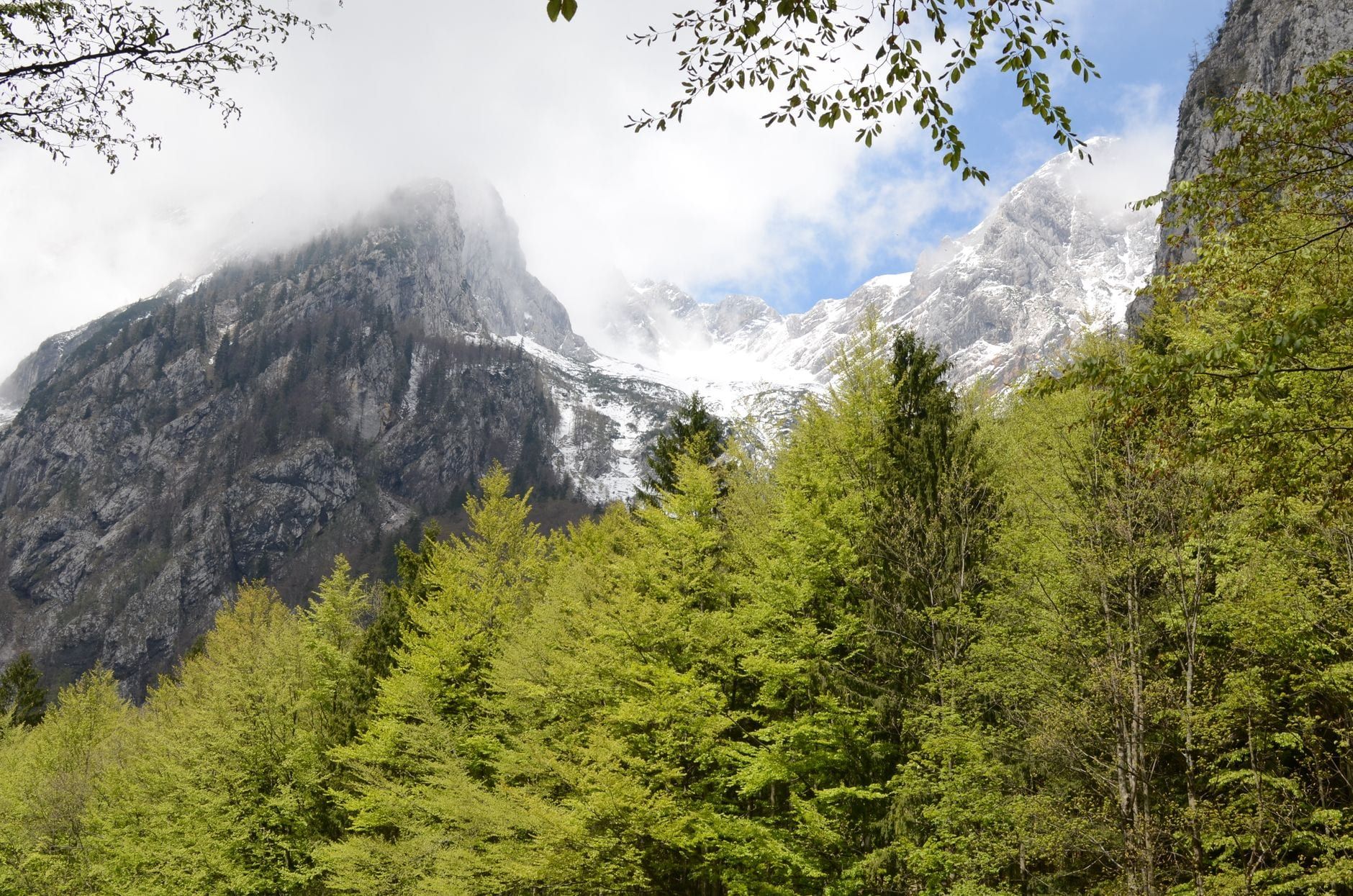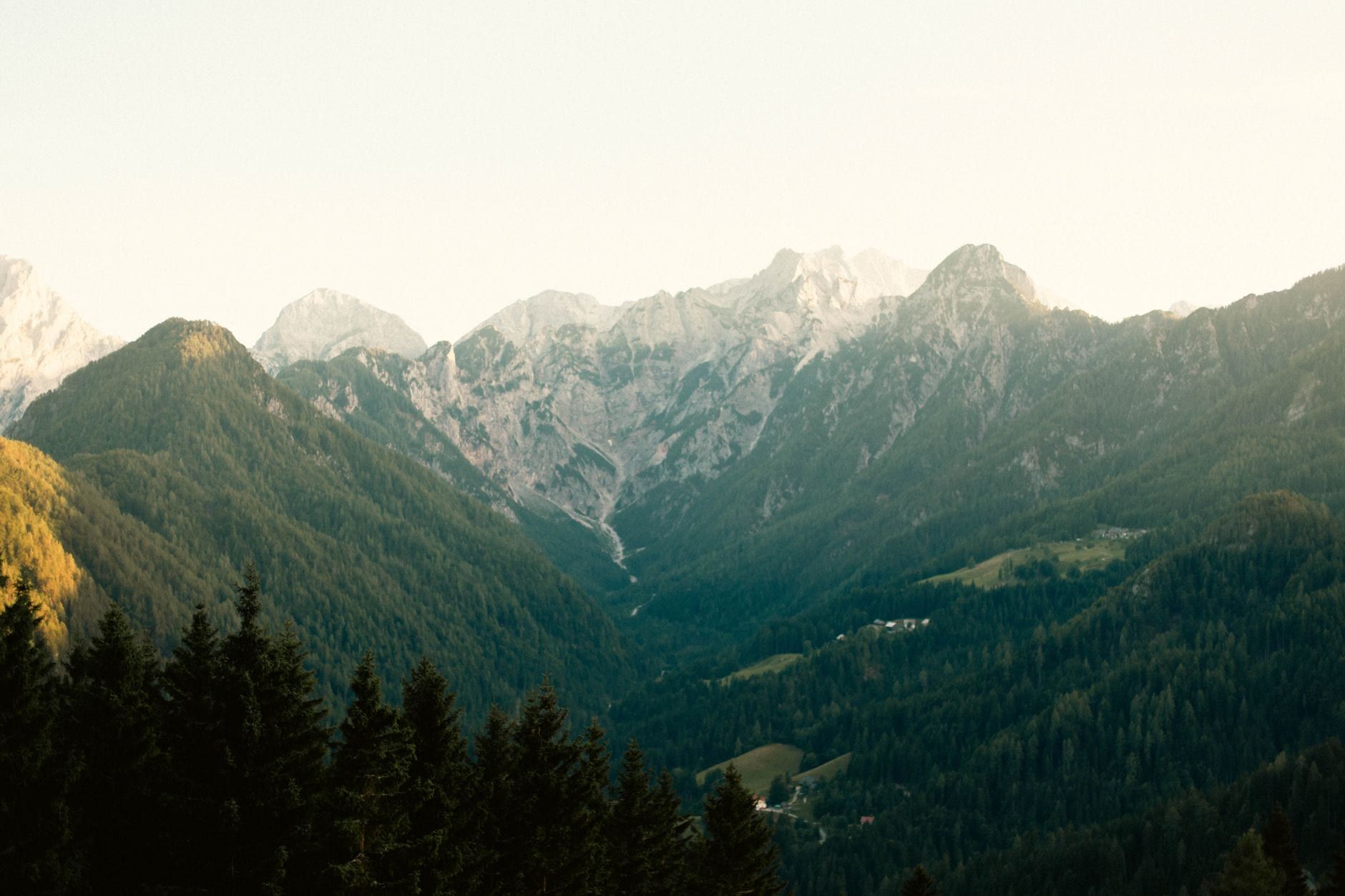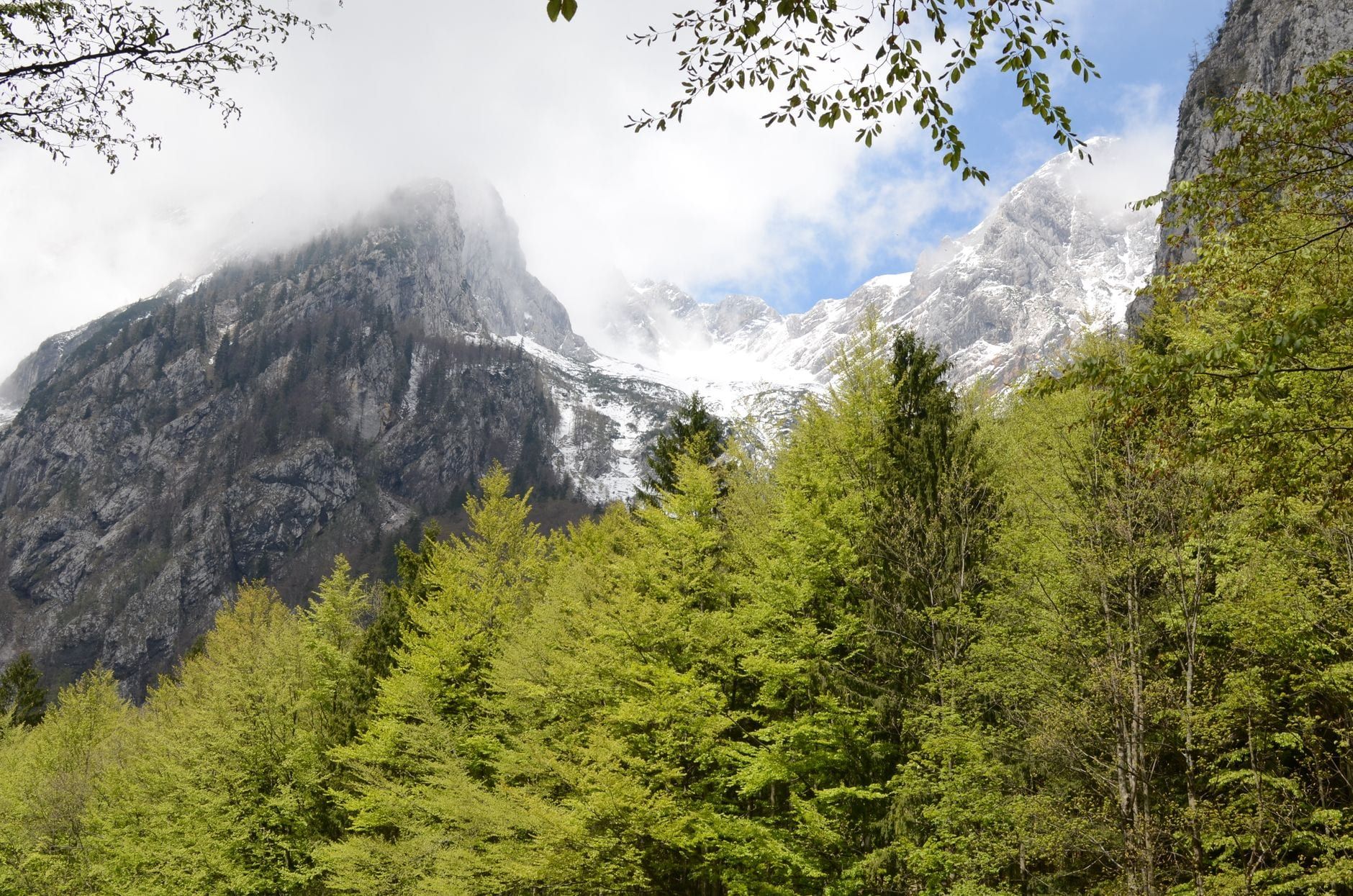
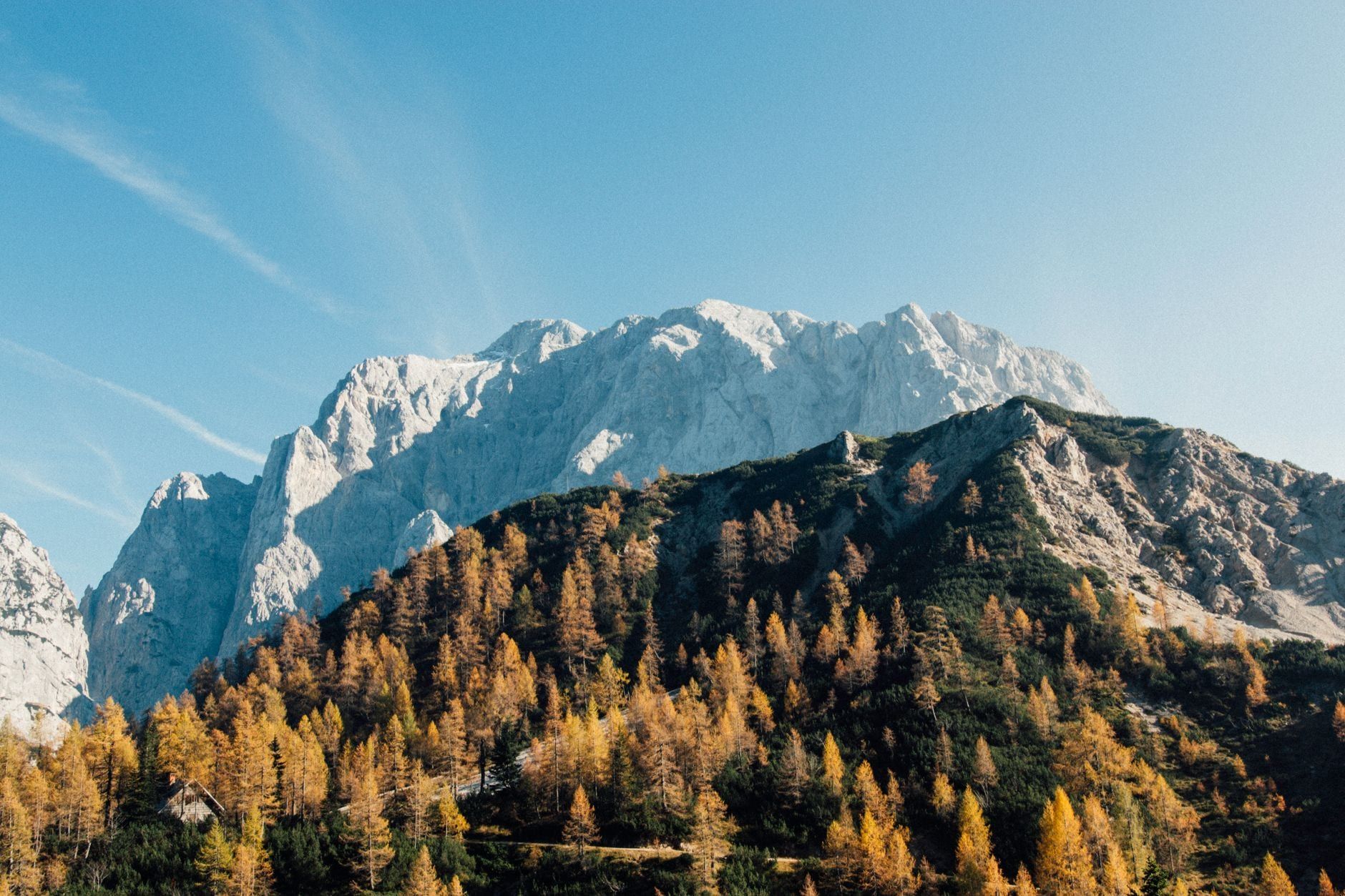
Mount Triglav is 2,864 metres high, and you can stand on top of it without being a climber. The approaches from the valleys are walking routes — long, but rope-free — and only the final hour, on steel cables, is genuinely exposed. Fit hikers do the whole thing in two days with a night in a mountain hut. That's the plan this guide walks you through.
The peak sits at the heart of Slovenia's only national park, an 840 km² stretch of the Julian Alps that's under two hours from Ljubljana by road. Somewhere between 15,000 and 20,000 people reach the summit every year, most of them ordinary hikers with a booked bunk and an early alarm. Here's how to become one of them.
What Climbing Mount Triglav Involves
Triglav is Slovenia's highest mountain and its national symbol — the three-peaked silhouette appears on the flag and the coat of arms, and Slovenes say you're not a true Slovene until you've climbed it. Four men from Bohinj made the first ascent on 26 August 1778. The cylindrical Aljaž Tower, a storm shelter erected on the summit in 1895, still crowns the top.
"Climbing" is a loose word here. The valley approaches are non-technical hiking; the final hour is steep, exposed via ferrata on cables and pegs. That combination puts the mountain in the intermediate bracket. You need the fitness to walk six or more hours with serious elevation gain, sure feet on broken rock, and no serious fear of heights. If you have all three, you're capable of this.
Children join regularly from about age 10–12, provided they can walk up to six consecutive hours and are clipped into the cables. One sobering footnote: the little glacier below the summit has shrunk to roughly half a football field, so don't expect ice — expect limestone.
Best Time to Climb Triglav (and the Weather to Expect)
Aim for late June to September, when the trails are snow-free and the huts are open. Local guides stretch the window to early July–mid October. Late June and early July bring the best scenery with the fewest people, and September is the other quiet sweet spot; on August and September weekends more than 2,000 people a day start up the mountain, and you'll queue on the cables below the summit.
Summer afternoons bring thunderstorms, often on a schedule you could set a watch by. Summit days start at or before 6 a.m. for that reason, and a headlamp in the pack is standard. Before you set out, read the ARSO mountain forecast and watch its precipitation radar — that's the tool the guides themselves use, both the night before and on the morning.
Snow lingers on the north-facing routes until the end of June, and even a short snow passage completely changes the difficulty of a path: it calls for crampons and an ice axe, or a different route. From November to early June the mountain belongs to experienced mountaineers with full winter gear — winter ascents are a different sport entirely. Only the Kredarica hut stays staffed through the cold months, because it doubles as a weather station.
Choosing Your Route: The Five Main Approaches Compared
Five main valleys lead to Triglav, and the right one depends on your legs, your head for heights, and how many days you have. If you're weighing the summit against easier park walks first, our guide to hiking in Triglav National Park covers the valley options. The numbers below are one-way figures to the summit.
Krma Valley — the easiest way up
Krma is the most straightforward and least exposed approach: 11.5 km one way, about 1,955 m of gain, roughly 6 hours to Kredarica. There's no cable section on the approach itself — the via ferrata only arrives at the very top. That makes it the default choice for first-timers, families, and anyone with a queasy relationship with exposure. It's also the usual winter route.
Vrata Valley — three routes under the North Face
Vrata starts at the Aljažev Dom hut (1,015 m) and walks into an amphitheatre: the Triglav North Face, locally just "the Wall," is roughly 1,000 m high and more than 3 km wide. Three marked routes climb its flanks. Čez Prag (8.2 km, 1,860 m, ~6 h) is the most popular. Tominškova pot (5.9 km, 1,860 m, ~6 h) is shorter but slightly harder. Čez Plemenice (7.1 km, 1,849 m, ~6.5 h) is the hardest and the most scenic, threading closest to the Wall itself.
Pokljuka Plateau — the gentlest gain
From Rudno Polje on the Pokljuka karst plateau, the route runs 11.8 km with about 1,650 m of gain — the smallest climb of the main approaches, though it still takes around 6 hours via the Vodnik hut. The trade-off is a long start across forest and pasture before the mountain proper begins. Bled is the natural base.
Seven Lakes Valley — the scenic classic
From Lake Bohinj up through the Triglav Lakes Valley, the route covers 17.5 km one way with about 2,530 m of gain and close to 9 hours of walking — plan on 2–3 days. You pass a chain of glacial lakes through the oldest protected corner of the park, first set aside in 1924. This is the choice if you want a trek through the national park rather than just a summit.
Zadnjica and the Soča side
From the Zadnjica valley above Trenta, a First World War mule track climbs 13.9 km with about 2,215 m of gain (roughly 7.25 hours) to the Dolič hut. It's quiet, historic, and puts you on the sunny western side of the massif. Base yourself in Bovec if this is your line.
Two more for completeness. Kot Valley (8.5 km, ~2,050 m, ~6 h via the Stanič hut) is the least-visited approach, a good Krma alternative when you want solitude. The North Face itself holds more than 140 documented technical climbs; the Bamberg route, its hardest secured line, is serious alpine ground for experienced climbers with a guide — not a hiking option at all.
| Route | Distance | Elevation gain | Time | Best for |
|---|---|---|---|---|
| Krma Valley | 11.5 km | 1,955 m | ~6 h | First-timers, families |
| Čez Prag (Vrata) | 8.2 km | 1,860 m | ~6 h | Most popular Vrata line |
| Tominškova (Vrata) | 5.9 km | 1,860 m | ~6 h | Shorter, slightly harder |
| Čez Plemenice (Vrata) | 7.1 km | 1,849 m | ~6.5 h | Confident scramblers |
| Pokljuka Plateau | 11.8 km | 1,650 m | ~6 h | Least climbing |
| Zadnjica (Trenta) | 13.9 km | 2,215 m | ~7.25 h | Quiet, Soča side |
The Final Via Ferrata to the Summit
Whichever valley you choose, the last stretch is the same deal. Every ascent finishes one of three ways: from the Kredarica hut, from the Planika hut, or across Triglavska Škrbina — and all three are secured via ferrata. There is no non-exposed way to stand on Triglav.
Expect an hour of steep slabs and near-vertical steps bolted with steel cables and iron pegs, then the narrow connecting ridge past Mali Triglav to the Aljaž Tower at the top. None of it is technically difficult, but you'll want both hands free, a helmet, and a calm stomach. The Kredarica line is the busiest; hikers joining from Planika merge at Mali Triglav, so on peak weekends you'll wait your turn on the narrow passages. Don't overtake on the cables — wait for a wide ledge.
A Classic Two-Day Ascent, Step by Step
Most people climb Triglav from Krma with a night at Kredarica — here's that itinerary, hour by hour, plus the one-day question and where to sleep in the valleys.
Day 1: Krma trailhead to Kredarica
Walk in from the Krma Valley car park with a light pack: 11.5 km, 1,955 m of gain, about 6 hours. Aim to arrive at Kredarica by mid-afternoon, claim your bunk, and order the half-board dinner. The sunset from 2,515 m, with the Julian Alps flattening into ridgelines toward Italy, is half the reason to sleep up there.
Day 2: pre-dawn start, summit, and down
Set the alarm for around 5 a.m. The climb from Kredarica to the summit takes 2–3 hours including the via ferrata, which puts you on top as the light comes good. For the descent, retrace Krma, or make a loop: drop past the Planika hut and back toward Krma, or descend Čez Prag into Vrata if you've arranged a car or taxi shuttle at the far end.
Can you do it in one day?
Yes, and only via Krma or Vrata. The maths is roughly 2,000 m of gain and 9–11 hours on foot for an average mountaineer — the speed record is under 3 hours, which tells you who that record belongs to. A one-day push demands top fitness and a rock-stable forecast, and it forfeits the hut night and the summit at dawn. Take two days. Three-day variants through the Seven Lakes Valley suit anyone wanting more time in the park.
Where to base yourself
The park is under two hours from Ljubljana — see our page on how to get to the park for buses, trains and driving times. Mojstrana is the closest village to Krma, Vrata and Kot; Kranjska Gora works for the same trailheads; Bled suits Pokljuka; Bohinj is right for the Seven Lakes; Bovec serves the Soča approaches. For valley beds before and after, our accommodation guide lists the options around each base. If you'd rather not drive at all, guided trips from Ljubljana and departures from Bled handle the transfers for you.
Mountain Huts: Where You'll Sleep on the Mountain
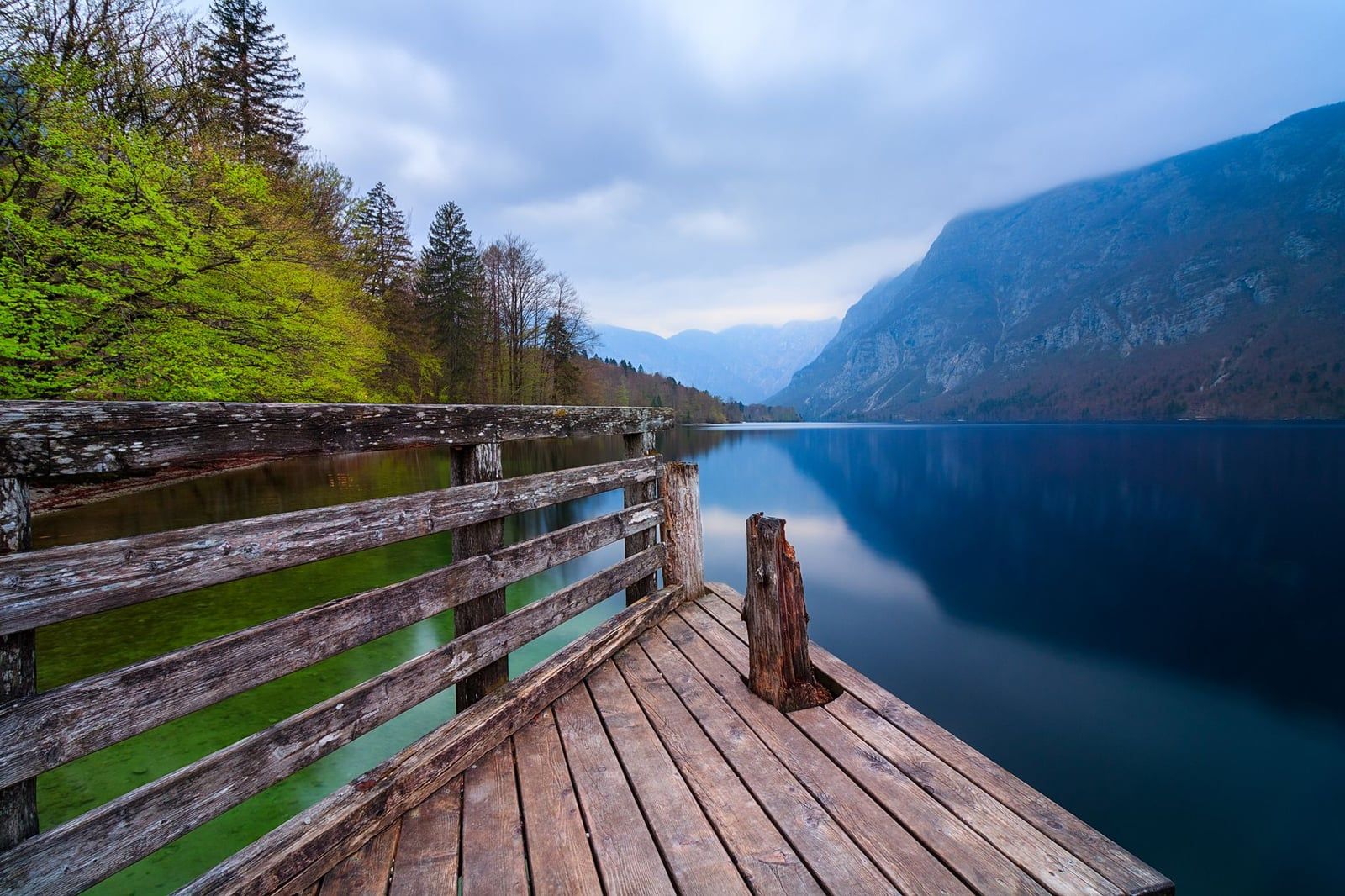
Kredarica, at 2,515 m, is the highest hut in Slovenia and the classic summit base: around 341 beds, open year-round because it also houses the weather station, and busy on every summer night. Planika (2,401 m, 143 beds) sits on the south side roughly 1.5 hours below the summit and is the quieter overnight. Dolič (2,151 m, small) serves the Zadnjica and Soča approaches. Lower down, Vodnik (1,817 m) breaks up the Pokljuka and Krma climbs, and Stanič (2,332 m) serves the Kot and Vrata lines. Apart from Kredarica, they open June to September.
Book ahead — up to six months for August and September weekends. Note the small print: reservations usually hold only until 5 p.m. unless you call to say you're running late. None of the high huts have running water or showers; you buy bottled water (about €4) and use simple toilets. Half-board is available everywhere, huts provide blankets (sleeping bags are banned — carry a liner instead), and while most take cards, keep cash as backup.
Membership of an alpine club — PZS, the BMC, Alpenverein — earns you discounted rates on beds and meals. If you climb even once a summer in the Alps, it pays for itself quickly.
What It Costs to Climb Triglav
Self-organized, a 2–3 day climb runs roughly €200–350 per person: hut half-board, food and drink, and trailhead transport, with via ferrata gear rental on top if you don't own a set. That's the whole bill — access to the park and its trails is free.
Guided changes the arithmetic. A 2-day group trip costs about €275 per person, including the guide, via ferrata equipment, and transfers from Bled, Bohinj or Kranjska Gora; hut half-board adds roughly €80. Private guiding starts around €595 for two days. You can compare guided Triglav tours to see which format fits your group.
Hut benchmarks: half-board at Kredarica runs around €65 per person; bed-and-breakfast at Vodnik or Planika is roughly €52–53. A dorm bed without an alpine club card costs €30–45 — about half that with one. Drinks are always extra, and at €4 a bottle you'll feel every litre. The money-savers are simple: join a group instead of booking privately, carry a club card, and eat the hut dinner rather than snacking à la carte.
Equipment and Packing List
The via ferrata kit comes first. A helmet is non-negotiable — rockfall is routine on the busy cable sections. Add a harness and a via ferrata set (both rentable in Bled and Bohinj, and included on guided trips), plus gloves so the cables don't chew your hands. For late June departures, pack crampons and an ice axe for the snowfields that may still cross the trail.
- Broken-in boots with grip and ankle support
- Warm midlayer, even when the valley is hot
- Rain shell — storms build fast
- 1.5+ litres of water per person
- High-energy snacks and a headlamp
- Sleeping liner, sun protection, ID
Water needs its own sentence: refill points above the valleys are scarce and the high huts sell bottled water at mountain prices, so carry at least 1.5 litres each and top up wherever you can. Navigation is straightforward but not automatic — trails carry the Knafeljc blaze (a red circle with a white dot), and a 1:25,000 Triglav paper map plus an offline map app on a charged phone (bring a power bank) covers the rest.
Safety on the Mountain (and When to Hire a Guide)
There is no legal requirement to hire a guide anywhere in Triglav National Park — trail access is free and unrestricted, and experienced, sure-footed hikers climb unguided every day. If you've handled a via ferrata set before, you have every right to go alone.
Hire a guide if any of these describe you: you've never used a via ferrata set, you have a real fear of heights, there are children in your party, the forecast is unsettled, or lingering early-season snow crosses your route. That last one matters — a wrong step on snow can be fatal, and guides carry the gear and judgement for it.
Weather discipline saves more people than gear does. Conditions change fast here; fog can erase the view and your bearings in minutes, and thunderstorms on the summit ridge are the mountain's deadliest hazard. Check the ARSO mountain forecast and its precipitation radar before and during the trip, and turn back rather than ride out a storm on the cables. Wear the helmet on the popular Vrata routes regardless of weather — that's where rockfall from climbers above is routine.
If something goes wrong, call 112 (voice or SMS), but expect spotty phone signal high up — tell someone your route and expected return before you leave. Mountain rescue is superb but not necessarily free: helicopter evacuation can be billed at around €25 a minute, capped near €500, so carry insurance that explicitly covers mountain rescue.
Frequently asked questions
Can you climb Mount Triglav without a guide?
Yes — there's no legal requirement in Triglav National Park, and most Slovenians climb unguided. A guide earns its fee if you've never used a via ferrata set, have a genuine fear of heights, or the forecast is unstable. Guided 2-day group climbs run about €275 per person including gear and transfers.
How difficult is it to climb Mount Triglav?
Intermediate. The approaches are non-technical hiking of six or more hours with up to about 2,000 m of gain, but every route's final hour is steep, exposed via ferrata needing a head for heights and sure feet.
Can you climb Triglav in one day?
It's possible via Krma or Vrata for the very fit — roughly 2,000 m of gain and 9–11 hours round trip. Almost everyone is better off taking two days with a hut night, which avoids the afternoon storm window and adds the sunset.
How much does it cost to climb Mount Triglav?
Self-organized, budget €200–350 per person for 2–3 days including hut half-board (€65–80 per night at the high huts), food and transport. Guided group trips start around €275 per person; private guiding from about €595 for two days.
When is the best time to climb Triglav?
Late June to September, when trails are snow-free and huts are open; local guides extend the window to mid-October. Start by 6 a.m. to beat crowds and afternoon thunderstorms, and expect over 2,000 ascents a day on August–September weekends.
Can children climb Mount Triglav?
Generally yes from about age 10–12, provided they can walk up to six consecutive hours. They should be clipped into the via ferrata sections and accompanied; most families use the Krma route or hire a guide.
Do you need to book the Triglav mountain huts in advance?
Yes. Kredarica, Planika and Dolič fill up in peak season — book up to six months ahead for August–September weekends. Reservations usually hold only until 5 p.m., and the high huts have no running water or showers.
Is the Triglav via ferrata safe for beginners?
It's well secured with cables and pegs, but the exposure on the final hour is real on every route. A helmet (rockfall), a via ferrata set, and sure-footedness are the baseline; fresh snow changes the difficulty completely and warrants a guide or a postponed trip.