From December to March, Triglav National Park runs a stripped-down programme. Snow closes the high passes, the gorge boardwalks board up, and most mountain huts lock their doors. Slovenia's only national park — 840 km² of the Julian Alps, crowned by 2,864-metre Triglav — doesn't shut, though. It just moves its centre of gravity down into the valleys, onto the lakes, and up the lift-served slopes.
That shift makes winter a different trip from the one most guides describe. If you want to swim in Bohinj, walk Vintgar Gorge or drive the Vršič Pass, come between June and October. If you want a windless lake, empty trails, snowshoe forests and skiing at Slovenian prices, winter is your season. Most winter visitors base in Bled — pairing the park with day trips around Lake Bled — or stay two or three nights, which, given how little stays open after dark, is plenty.
What Triglav National Park Looks Like in Winter
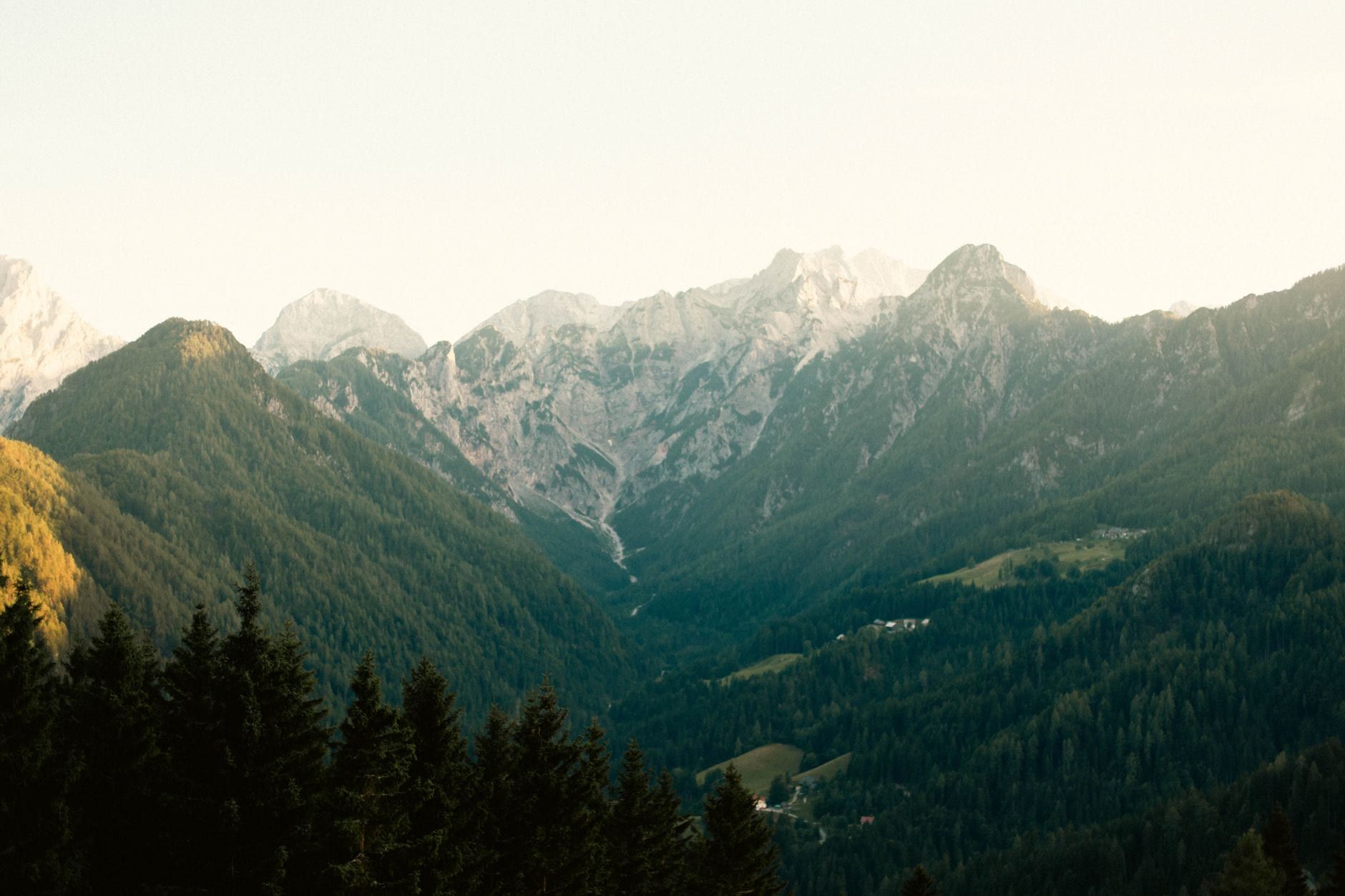
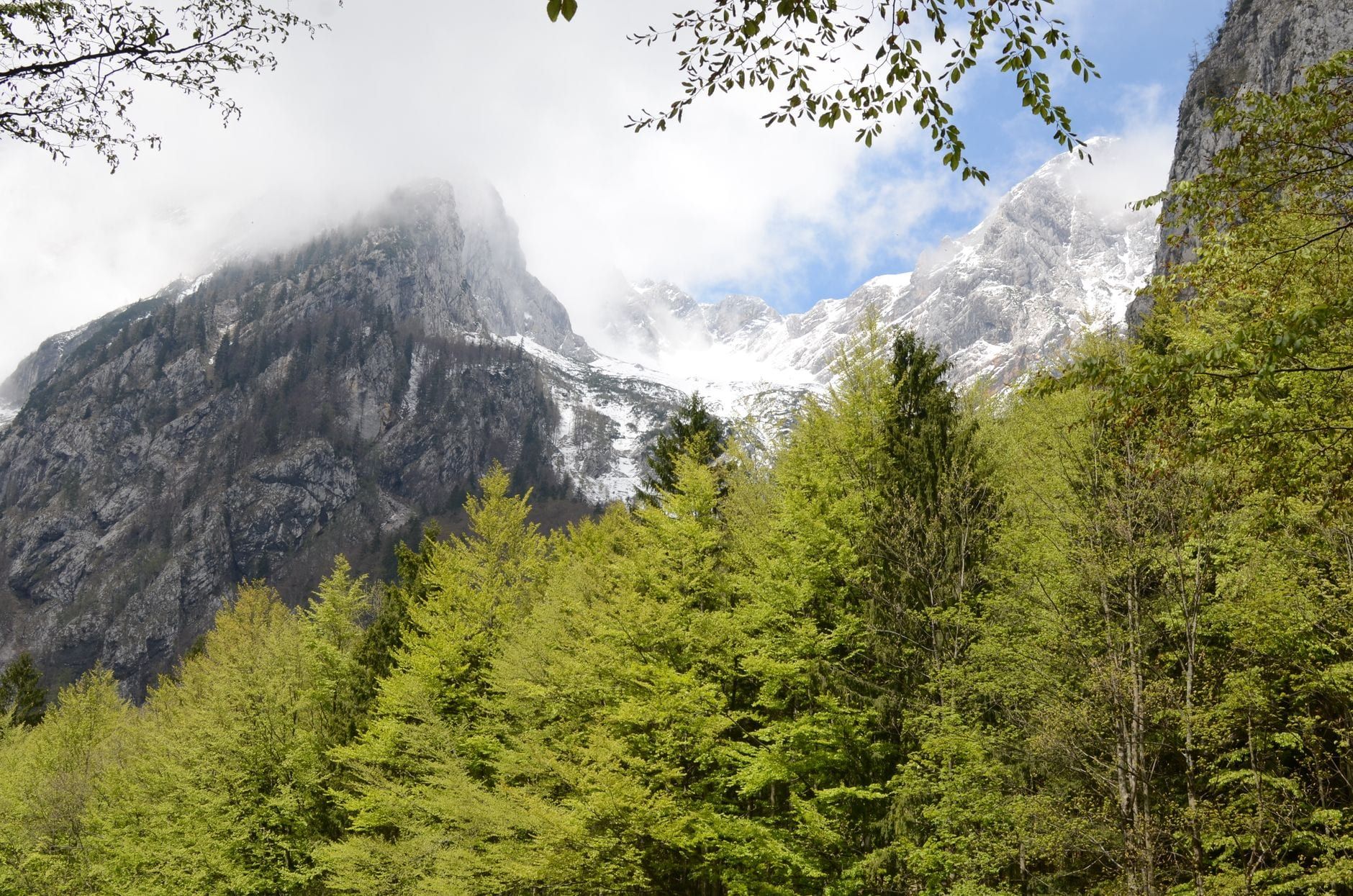
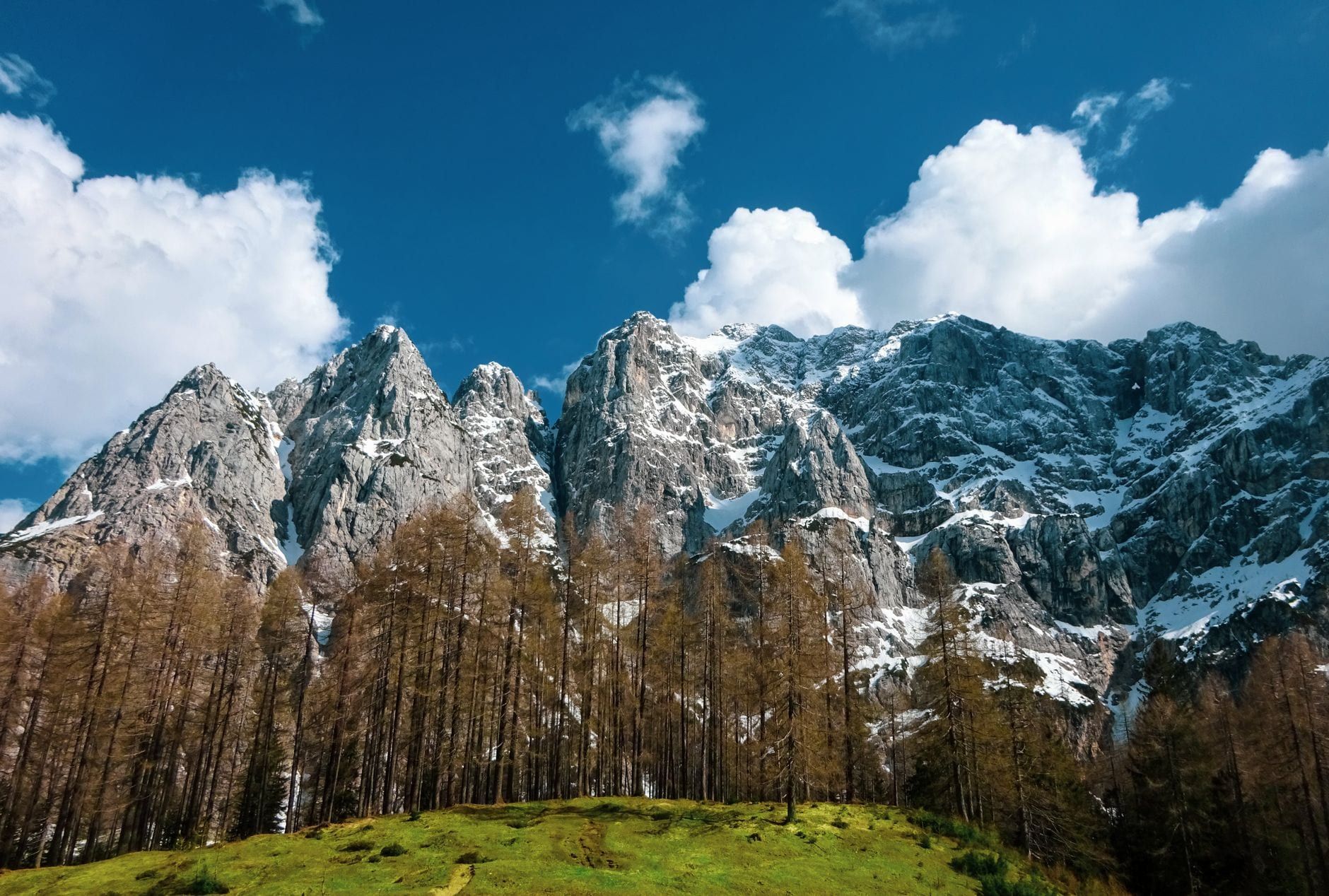
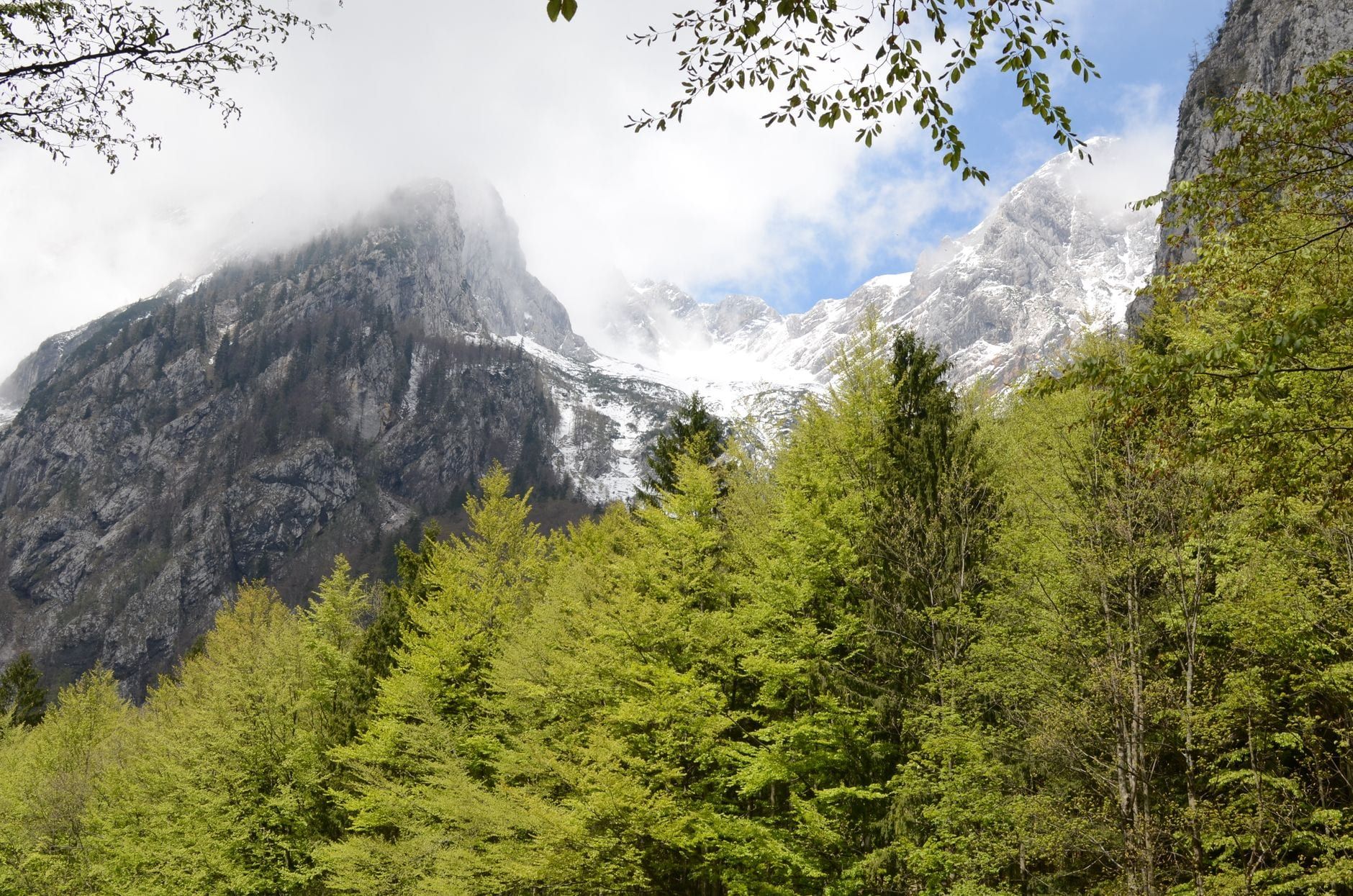
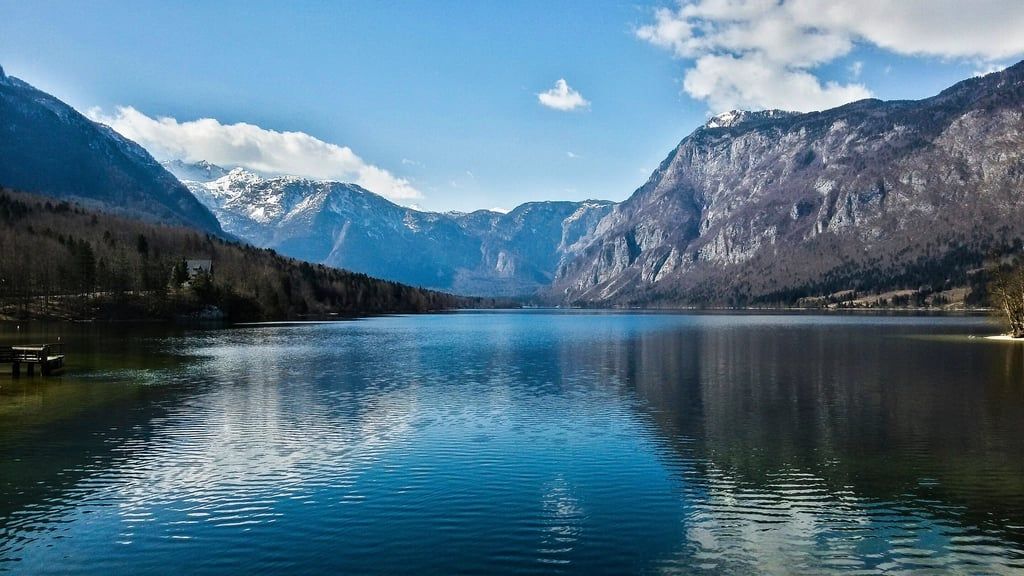
Winter here is quiet in a way summer never is. Lake Bohinj sits motionless under the snowbound slopes of the Komarča face, waterfalls freeze into columns, and the spruce plateaus hold snow long after the valleys have turned to mud. On a clear morning you can see Triglav's north face — a limestone wall nearly 3 km wide — from the Vrata valley floor, white from base to summit.
Be honest about the fit. Winter suits skiers, snowshoers, photographers and anyone who measures a good day by silence rather than distance. It doesn't suit swimmers, gorge walkers, or summit hikers without alpine skills. What's open in winter is open reliably — but the list is short, and everything outside it is under a metre of snow.
Daylight is the other constraint. December and January give you eight to nine hours between sunrise and sunset, and winter routes take roughly twice as long as the same ground in summer because snow slows every step. One anchor activity per day is the realistic pace; two only if the second is a short valley stop.
What's Open and What's Closed in Winter
This is the rundown winter visitors actually need, in one place. The headline attractions competitors build summer itineraries around are, mostly, closed — and knowing that before you plan saves a wasted drive.
| Attraction | Winter status | Notes |
|---|---|---|
| Vršič Pass road | Closed | Open only about 7 months a year; check promet.si for the reopening date |
| Vintgar Gorge | Closed | Boardwalks ice over; season runs spring to late October |
| Peričnik Waterfall route | Closed | Officially off-limits in winter because of ice |
| Lake Bohinj panoramic boat | Closed | Runs April–November only |
| Vogel cable car | Open | Year-round; adult return about €30, up to €35 at peak |
| Mostnica Gorge | Open, free | Free entry in winter; paid mid-March to October |
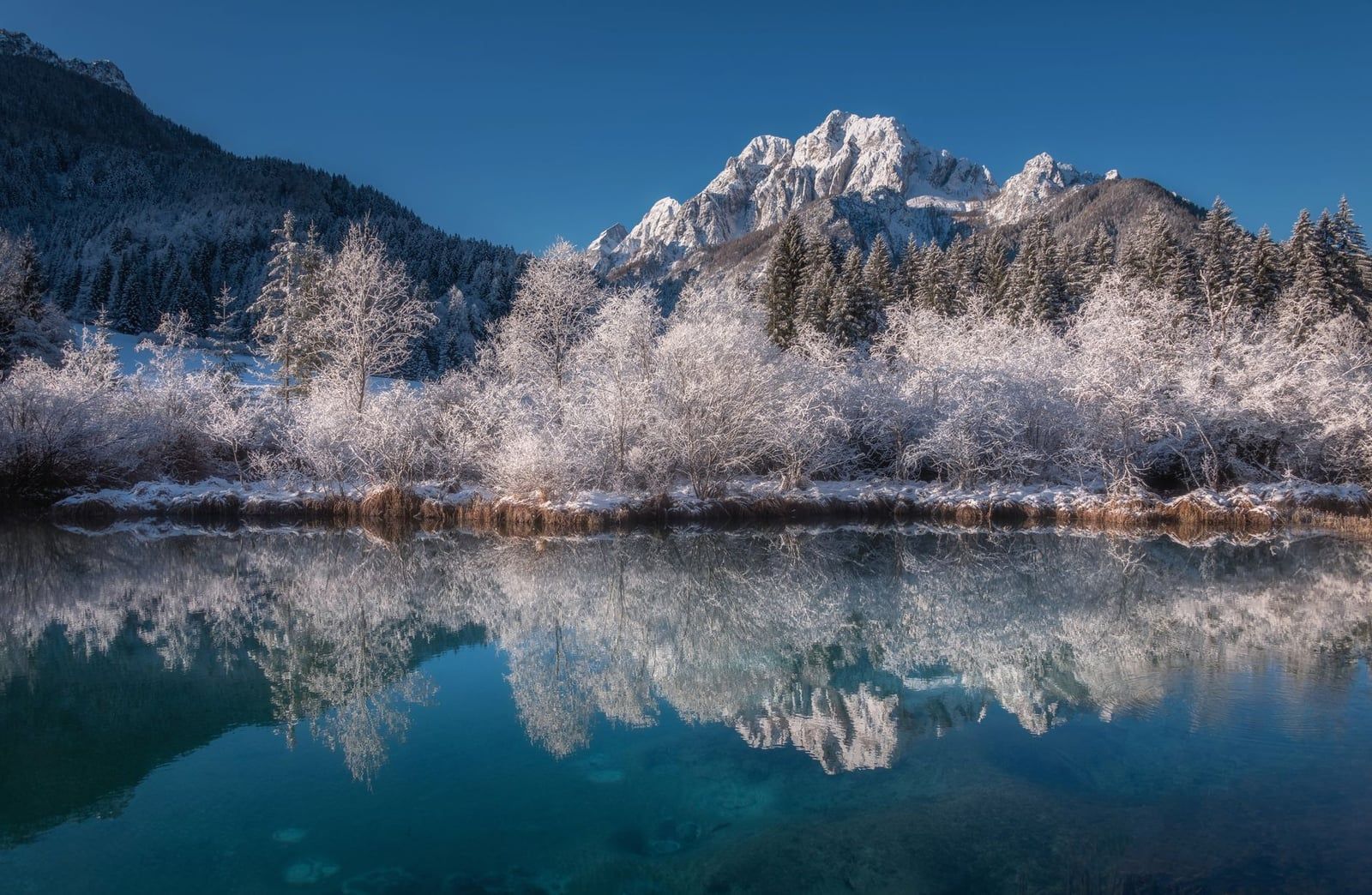
Plenty still works. The Lake Bohinj shoreline is free and flat, and in frost it's the best walk in the park. Zelenci spring, near Kranjska Gora, holds at about 6°C year-round and never freezes — an emerald pool ringed by ice. Kozjak Waterfall, above the Soča, is a short forest hike with frozen patches to mind on the rocks. The Great Soča Gorge stays reachable but slippery, especially directly above the gorge. Savica Waterfall is maintained through winter weather permitting, for the usual €4 entry, and freezes into an A-shaped icefall worth the steep stairs.
The trails on any summer hiking list for the park are mostly snowed under by January — treat them as next-season material. And remember the park itself never charges: there is no entrance fee or permit, ever, only the individual attractions that charge in season.
The compensation for all those closures is space. No timed tickets, no mid-morning parking chaos at trailheads, no queues at viewpoints. Before any winter day out, check promet.si for road status and the park's current-conditions page — gorges and waterfall paths close without notice when ice or rockfall makes them unsafe.
The Best Winter Things to Do in Triglav National Park
The winter programme splits into three: downhill and cross-country skiing, snowshoeing, and slow valley sightseeing. Every one of them is lift-served, low-altitude or guided — which is exactly the point. Here's what each looks like on the ground.
Skiing at Vogel and Kranjska Gora
Vogel, above Lake Bohinj, is the winter anchor of the southern park. The cable car lifts you about 1,000 metres above the lake to Rjava Skala at 1,535 m, running 8:00–18:00, and the slopes beneath it are high enough to hold snow reliably through the season. The view over the frozen lake is the reason to pick it even on a non-skiing day. Kranjska Gora, on the northern edge, is Slovenia's best-known ski resort — lower, gentler, and better suited to families and anyone who wants a town at the bottom of the lift.
Planica Nordic Centre
Ten minutes down the valley from Kranjska Gora, Planica is where Slovenian ski-jumping lives. The Nordic centre pairs its giant ski-flying hill with an extensive network of cross-country trails that wind through the pine flats at the head of the valley. For cross-country skiers it's the best-value day in the region; for everyone else, standing at the bottom of one of the largest ski jumps on earth is a twenty-minute stop worth making.
Snowshoeing
Snowshoeing is the park's winter sport for people who don't ski, and four areas do it best:
- Pokljuka plateau — snowy spruce forest, gentle tracks, partly inside the park
- Tamar valley — walked from Kranjska Gora, with sledding back down
- Lake Bohinj and Vogel — including full-moon and lantern walks
- Soča Valley — white forest paths on the quiet Bovec side
Kranjska Gora runs organised snowshoe hikes by day and night, and the Tamar walk — a flat valley floor under the Prisojinik walls — doubles as a sled run on the way back. Bohinj's full-moon snowshoe hikes on Vogel and lantern walks around the lake are the most atmospheric of the lot; book ahead, they fill. If you have no gear, no car and no snow experience, guided tours from Bled cover snowshoe rental, transport and a route chosen for the conditions.
Slow Winter Sightseeing
Non-sporty visitors get a real programme too, just a slower one. Walk the Bohinj shoreline to the frescoed Church of St John the Baptist — about an hour each way on the flat, with coffee in Ribčev Laz in between. Drive to Zelenci for the never-freezing spring, and stop for the frozen cascades around the Savica area, where the ice formations out-photograph the summer flow. Kozjak Waterfall above the Soča makes a short, beautiful forest hike; go in the morning, before the thaw softens the path. Car-free travellers can see most of this on a guided winter sightseeing tour from Bled.
Winter Safety, Gear and Mountain Conditions
The park authority is blunt about winter: your safety is your own responsibility. Trails are maintained within the park's means, but nobody guarantees anything above the valleys, and most accidents in the Slovenian mountains come down to slips on ground people misjudged. So treat this section as the trip-planning part of the article, not the fine print.
The official winter kit for anything above a valley walk:
- Avalanche triplet: transceiver, probe, shovel
- Ice axe and crampons
- Helmet
- Winter mountaineering boots and gaiters
- Layers against wind, cold and moisture, plus sun protection
Gear alone doesn't get you up anything. The park's own advice is that you must know how to use the kit — otherwise pick an easier objective or go with a certified mountain guide. Winter days are short, snow doubles your time, and the rule is simple: start early, and don't go into the mountains alone.
Wildlife rules tighten in winter too, because deep snow and cold push chamois, capercaillie and ptarmigan to their energy limits. Stay on open slopes above the tree line rather than cutting across them, avoid rocky nooks and snow-filled crevices where animals shelter, keep to forest tracks and marked paths, keep dogs on a lead, and move quietly. The park fines for disturbing wildlife, and it doesn't take much distance from a trail to count.
Climbing Mount Triglav in Winter
Yes, it's possible — and no, you shouldn't do it alone. The normal route ends on a via ferrata section regardless of season, and in winter it's wrapped in ice with avalanche-prone slopes below. A certified guide turns it from a serious alpine undertaking into an expensive but achievable ascent, and the summit views across a snowbound Julian Alps are the payoff. Book well ahead; winter guides are few and the price runs well above summer rates.
Overnights shape the climb. Most huts are closed, but some keep a winter room — always unlocked, unheated, and empty of food, so you carry everything including a warm sleeping bag. Free bivouac shelters, usually sized for four to ten people, stand open year-round with no heating at all. A few lower huts stay staffed through the winter. Any of these options is for self-sufficient climbers only.
Who should say no: anyone without winter alpine experience, confident crampon and ice-axe technique, and avalanche judgement. That's the park authority's own line, not a travel writer's caution. If the winter version sounds like too much, the summer two-day ascent is a very different animal — our guide to climbing Mount Triglav covers routes and costs for the July-to-September window.
Where to Base Yourself and How to Get Around in Winter
Four villages cover the winter park. Lake Bohinj is the quietest and the most photogenic, with Vogel's cable car at the end of the lake. Bled has the most beds, restaurants and tour departures, and sits about ten minutes from the park boundary and an hour from Ljubljana. Kranjska Gora owns the north: its own ski slopes, the Tamar valley, Planica and Zelenci are all within a short drive. Bovec, on the Soča side, is the deep-winter option — peaceful, low-lying, and cut off from the Bled side while Vršič is closed, so you reach it the long way around via the Soča valley roads.
| Bled | Lake Bohinj | |
|---|---|---|
| Getting there | About 1 hour from Ljubljana; 10 minutes to the park's Bohinj side | 20 minutes further on from Bled, at the foot of Vogel |
| Winter anchor | Guided tours, ice-skating if the lake freezes, day trips in every direction | Vogel cable car on the doorstep, lakeshore walks, lantern snowshoe hikes |
| Best for | First-time visitors, families, anyone without a car | Photographers, skiers, quiet-seekers |
| Trade-off | Busier and more resort-like, even in January | Fewer restaurants and a very early lights-out |
Whatever the base, a car is close to mandatory. The services that make car-free summer visits work — Bohinj's free transit network and the Kranjska Gora–Vršič–Bovec bus — run only from late June to late September. Winter buses on the main corridors exist but are thin, and they don't reach trailheads. For how to get to the park and around it without driving, the practical answer is a base in Bled plus guided tours.
Driving itself is straightforward if you prepare. Slovenian rules require proper winter equipment on cars in the cold months, so confirm your rental has it before you collect the car, check road status on promet.si each evening, and expect the pass roads to be shut no matter what your map app claims.
Sleeping inside the park in winter means the winter rooms and bivouacs described above, plus a handful of lower huts that stay open — a self-sufficient game. Everyone else should book valley accommodation: our guide to where to stay in and around the park covers the year-round options. Camping is only legal in designated campsites; wild camping and sleeping in vehicles outside official areas can bring fines, and the rule is enforced.
One Winter Day in Triglav National Park: A Sample Itinerary
Build the day around the eight or nine hours of daylight, with one anchor activity and stops that can be cut without regret. Check the avalanche bulletin and promet.si the night before, and if the forecast turns, swap anything above the valley floor for the lakeshore and Zelenci.
Plan A: From Bled or Bohinj
Start at Ribčev Laz as the light arrives and walk the Bohinj shoreline to the Church of St John the Baptist — flat, quiet, and the lake at its stillest before the wind picks up. Then take the Vogel cable car up for the panorama; even non-skiers should budget an hour at the top, where the whole Bohinj basin sits under snow and Triglav anchors the skyline. If you ski, this is your morning gone, happily.
In the afternoon, drive up to the Pokljuka plateau for a snowshoe circuit through the spruce forest — you can tailor the length to the remaining daylight. On the way back to Bled, detour to Zelenci for the unfrozen spring, or stop in Kranjska Gora for dinner before the last stretch. That's a full winter day without touching a closed gate.
Plan B: The Kranjska Gora Variant
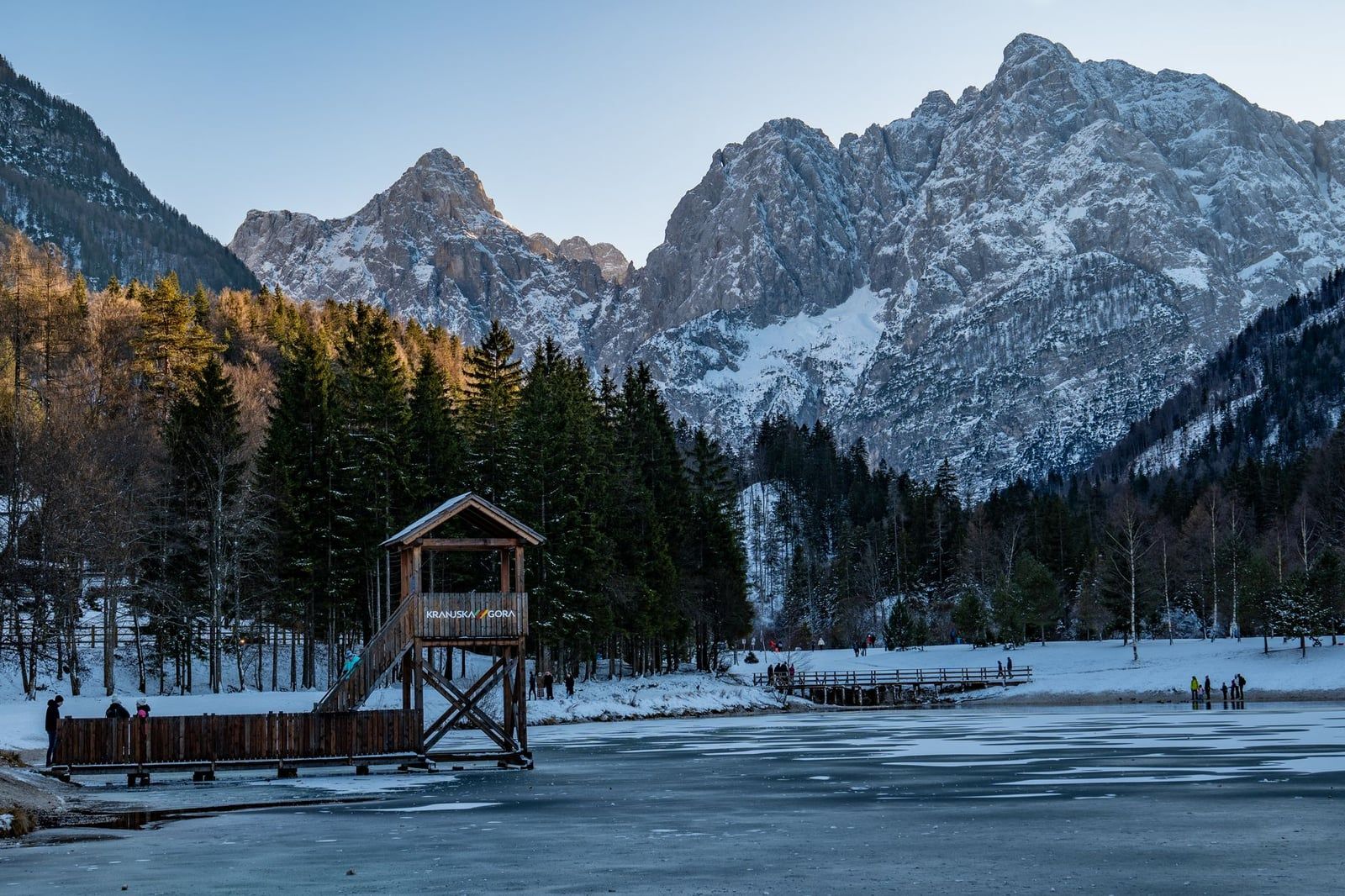
From Kranjska Gora, start at Lake Jasna — two small lakes at the head of the valley, framed by the Martuljek peaks and usually half-frozen, a five-minute walk from the road. Move on to Planica for the cross-country trails or a look at the ski-flying hill, then spend the main hours of daylight snowshoeing up the Tamar valley and riding a sled down the final stretch if there's snow cover. It's the most complete day in the winter park that barely needs the car, because everything sits within a few kilometres of the village.
FAQs: Triglav National Park in Winter
Is Triglav National Park open in winter?
Yes — the park is open year-round and free to enter, with no gates or permits. What closes are the roads (Vršič Pass), attractions (Vintgar Gorge, the Peričnik route, the panoramic boat), most mountain huts and the higher trails. The Vogel cable car and the Bled–Bohinj area stay accessible all winter.
Is the Vršič Pass open in winter?
No. The pass road is open only about seven months a year and shuts for winter, typically reopening in late spring. Check promet.si for the current status. Erjavčeva koča, the hut at the pass, still welcomes winter guests — reached on foot from the Kranjska Gora side up to the road closure point.
Can you climb Mount Triglav in winter?
Only with a certified mountain guide. The route includes a via ferrata section and avalanche terrain, and climbers need the full winter kit — transceiver, probe, shovel, crampons, ice axe and helmet. Some huts keep unlocked, unheated winter rooms; bring your own food and a warm sleeping bag. Expect to pay well above summer guide rates.
Where can you go snowshoeing in Triglav National Park?
The classic four: the Pokljuka plateau's snowy spruce forests, the Tamar valley from Kranjska Gora (which also has sledding), Lake Bohinj and Vogel (including full-moon and lantern walks), and the Soča Valley. Guided snowshoe tours also run from Bled for beginners and visitors without a car.
Is Vintgar Gorge open in winter?
No — the gorge is fully closed from November to March, with the season running roughly spring to late October. For similar water-and-ice scenery in winter, walk the Lake Bohinj shoreline, visit the Zelenci spring (which never freezes) or the Soča Valley gorges, watching for icy patches on the rocks.
Do you need a car to visit Triglav National Park in winter?
Practically, yes. The seasonal networks that make car-free summer visits work — Bohinj's free transit and the Kranjska Gora–Vršič–Bovec bus — run only from late June to late September. Base yourself in Bled, Bohinj or Kranjska Gora and drive, or book a guided winter tour from Bled.
Where can you stay overnight in the park in winter?
Most mountain huts are closed, but some keep unlocked, unheated winter rooms with no food provided — carry supplies and a sleeping bag. Free bivouac shelters for four to ten people stand open year-round, and a few lower huts stay staffed. Camping is only allowed in designated campsites; wild camping is forbidden and fined.
What skiing is there in Triglav National Park?
Alpine skiing at Vogel above Lake Bohinj, where the cable car runs year-round at about €30 adult return, and on Kranjska Gora's slopes in the north. Planica Nordic Centre adds cross-country trails and ski-jumping hills near Kranjska Gora.
Sources
- tnp.si/en/visiting-park/activities/winter-sports
- tnp.si/en/park/basic-information/triglavski-narodni-park
- promet.si/en
- meteo.arso.gov.si/met/sl/weather/bulletin/mountain/avalanche/
- new.pzs.si/mountain-huts/
- vogel.si/en
- bohinj.si/en/savica-waterfall
- vintgar.si/en/my-visit/opening-hours
- slovenia.info/en/stories/winter-hikes-and-snowshoeing-in-slovenia