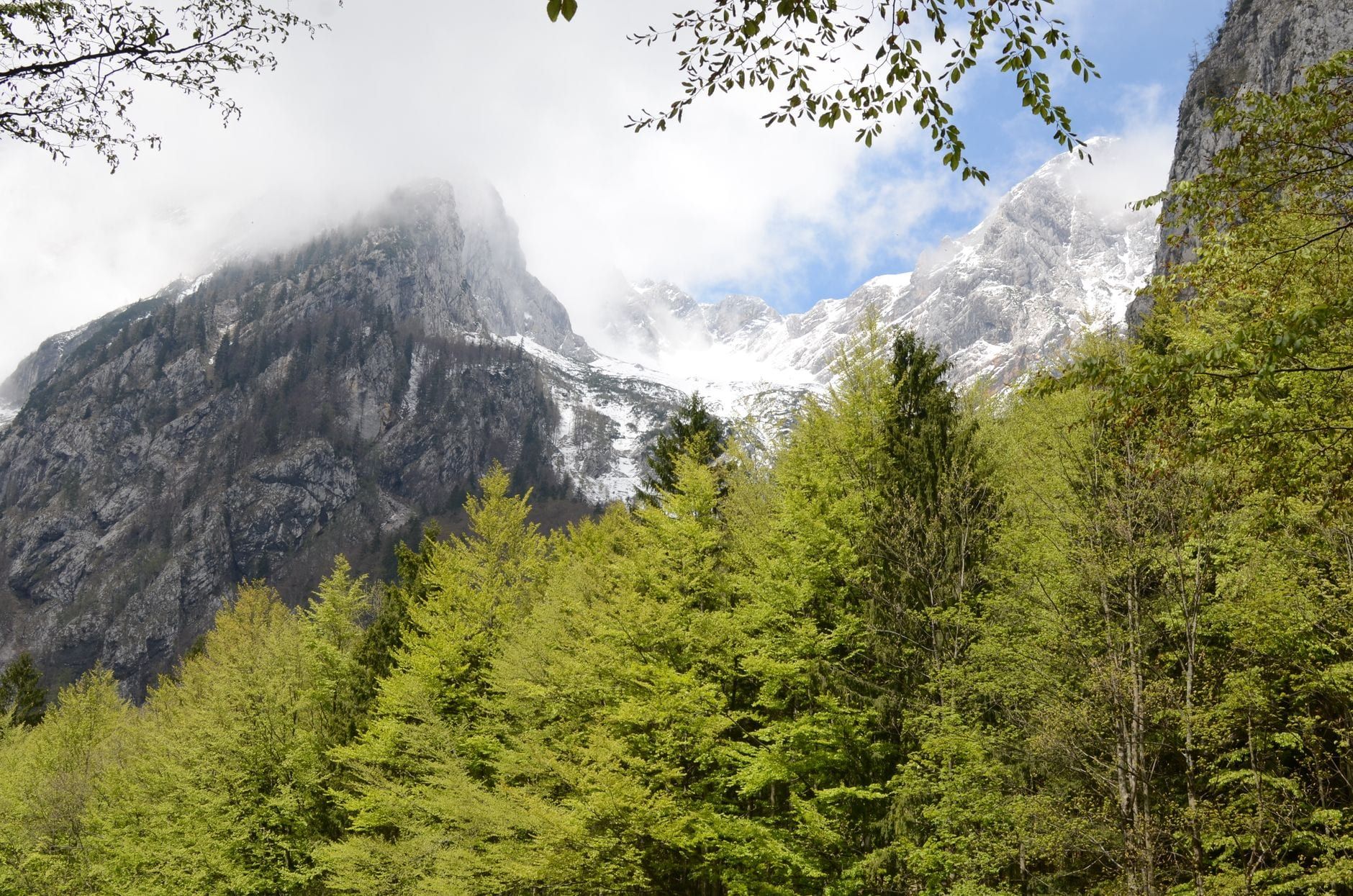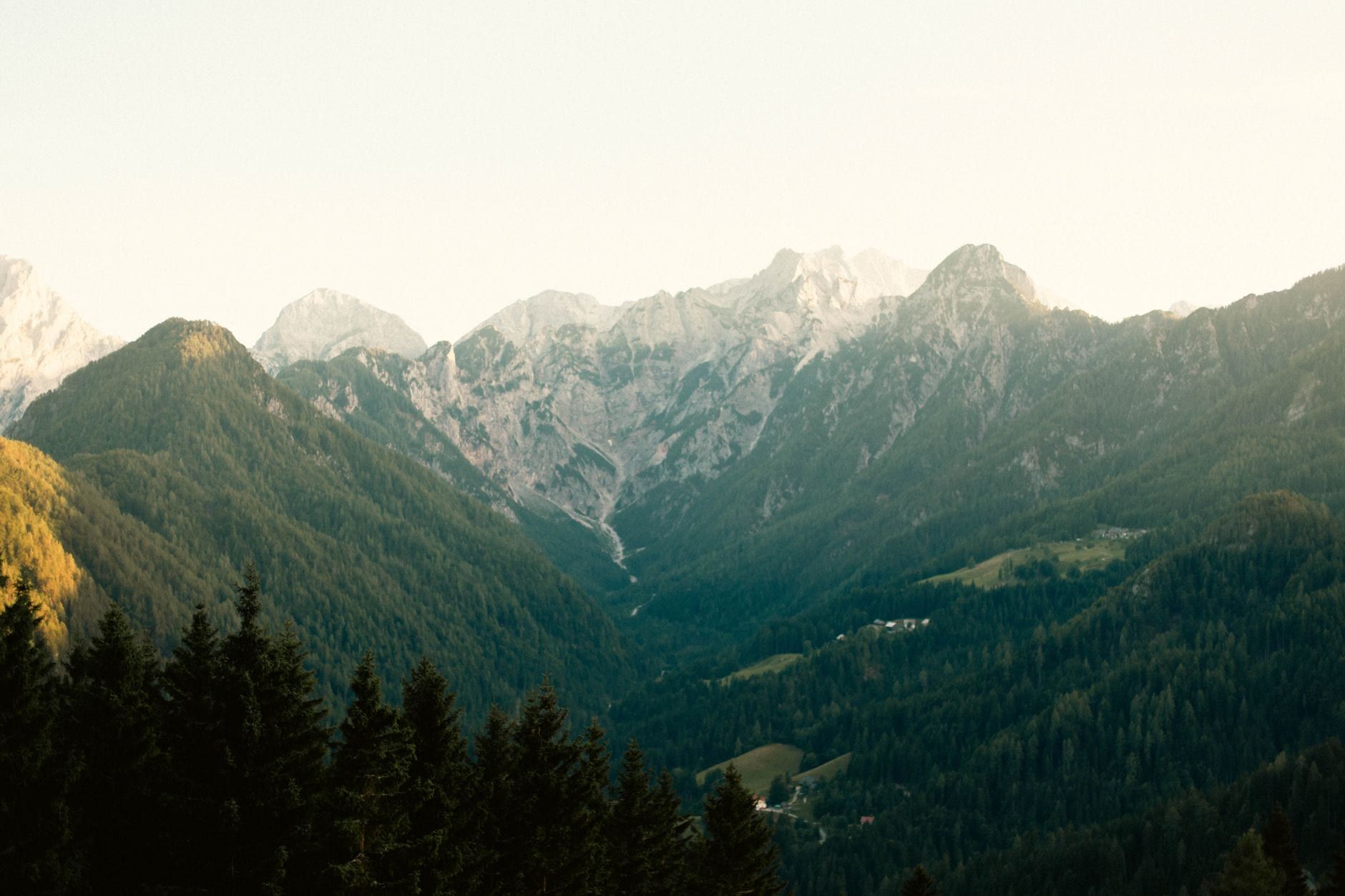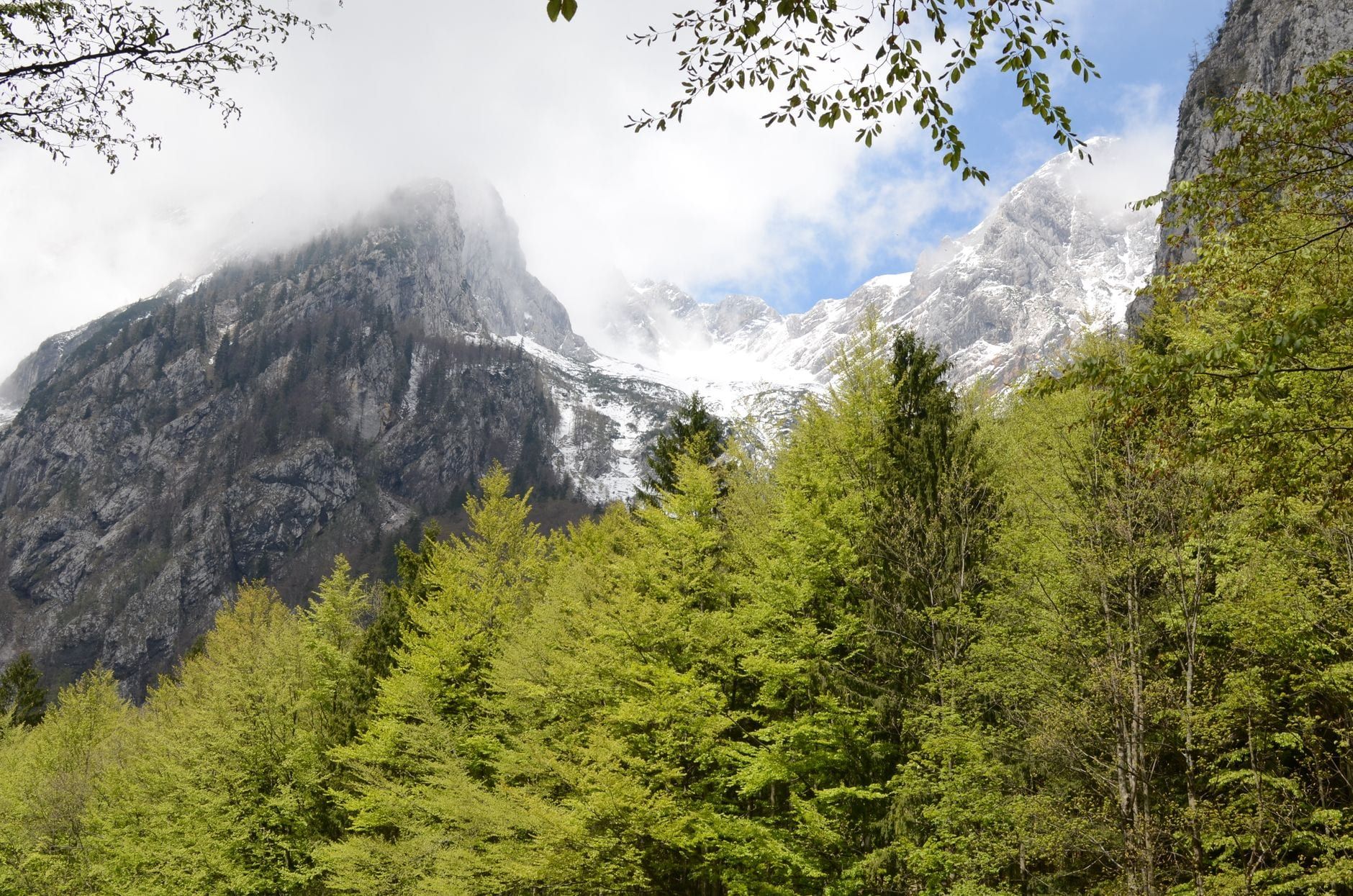
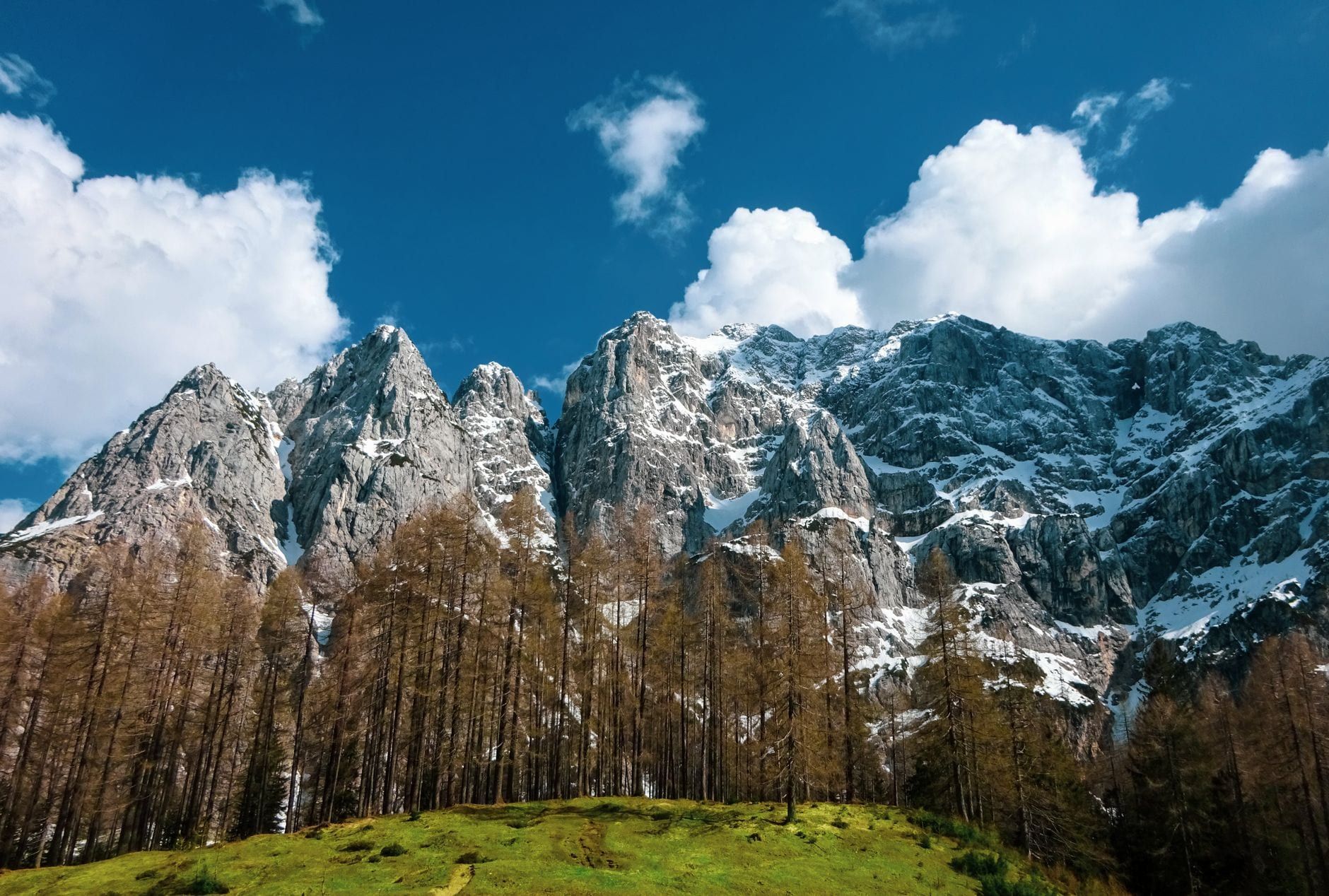
Deciding where to sleep is the single biggest planning call for Triglav National Park, because the answer changes the shape of your whole trip. Slovenia's only national park covers 840 km² of the Julian Alps around the country's highest peak, 2,864-metre Mount Triglav, and there is no entrance fee — you can walk, drive or bus through freely, with only attractions like Vintgar Gorge charging admission (see park opening hours and entry fees). What's restricted is where you can spend the night.
This guide covers both sides of the line: sleeping inside the park in mountain huts, park-run cottages and official campsites, and basing yourself in the gateway towns of Lake Bohinj, Kranjska Gora, Bled and Bovec. It ends with a decision framework that matches your trip — summit push, family lake holiday, Soča adventure, car-free week — to the right bed.
Triglav National Park Accommodation: The Short Answer
Inside the park you can legally sleep in three ways: a mountain hut bed, a cottage run by the Triglav National Park Public Institution, or a pitch at a designated campsite. A handful of hamlets — Stara Fužina, Ribčev Laz and Ukanc around Lake Bohinj, plus settlements in the Trenta and Soča valleys — also have guesthouses and apartments inside the boundary. Roughly 2,300 people live in the park's 33 settlements, so permanent lodging exists, but it is limited and books out first in summer.
Everyone else sleeps in the gateway towns just outside. Lake Bohinj sits at the eastern end of its own lake, inside the park boundary's edge, and is the strongest base for hiking. Kranjska Gora guards the northern valleys (Vrata, Krma, Martuljek) and the Vršič Pass road. Bled, a 10-minute drive from the park, trades trailhead proximity for restaurants, spas and a bigger choice of beds. Bovec and Kobarid hold down the western side along the emerald Soča River.
One nuance matters when booking: "in the park" is not always obvious on a map, and some booking sites list Bohinj or Bovec addresses without saying which side of the line they fall on. It rarely matters practically — the boundary is unmarked on the ground and there are no gates — but it explains why the same search can return both a hut at 1,800 m and a hotel in Bled. Book by valley and village, not by the park label.
Types of Accommodation In and Around the Park
Mountain huts (planinska koča) are the park's signature lodging: staffed dormitories and simple rooms high in the mountains, open mainly from late June to early September. They suit hikers doing hut-to-hut routes or a Triglav summit overnight, and they're covered in detail below. Below them in altitude and above them in comfort sit the park's own cottages, bookable through the Triglav National Park Public Institution:
- Hut Goreljek na Pokljuki, on the Pokljuka plateau
- Vršič Hut, at the top of the pass
- Vrata Hut, below Triglav's north face
- Trenta Lodge, in the Soča headwaters
- Trenta apartments
- Planinka House at Pokljuka
These six give you a simple overnight inside the park without committing to a full mountain day — handy in spring and autumn when the staffed huts are shut. In the gateway towns the choice widens to hotels, guesthouses, apartments and hostels at every price tier. Two further types are worth seeking out. Tourist farms (turistične kmetije) put you on a working farm with home-cooked dinners — Tourist Farm Kranjc in Koseč above Drežnica, near Kobarid, is the best-known example. Private chalets suit families and groups who want a kitchen and a garden rather than a hotel room.
When filtering options, look for the Triglav National Park Quality Mark. It's an official label for providers that support the local economy and traditions, guarantee quality and operate with respect for nature — a useful shortcut to stays that are actually rooted in the park rather than positioned around it. The park lists certified providers on its website, tnp.si.
Mountain Huts: Sleeping High in the Julian Alps
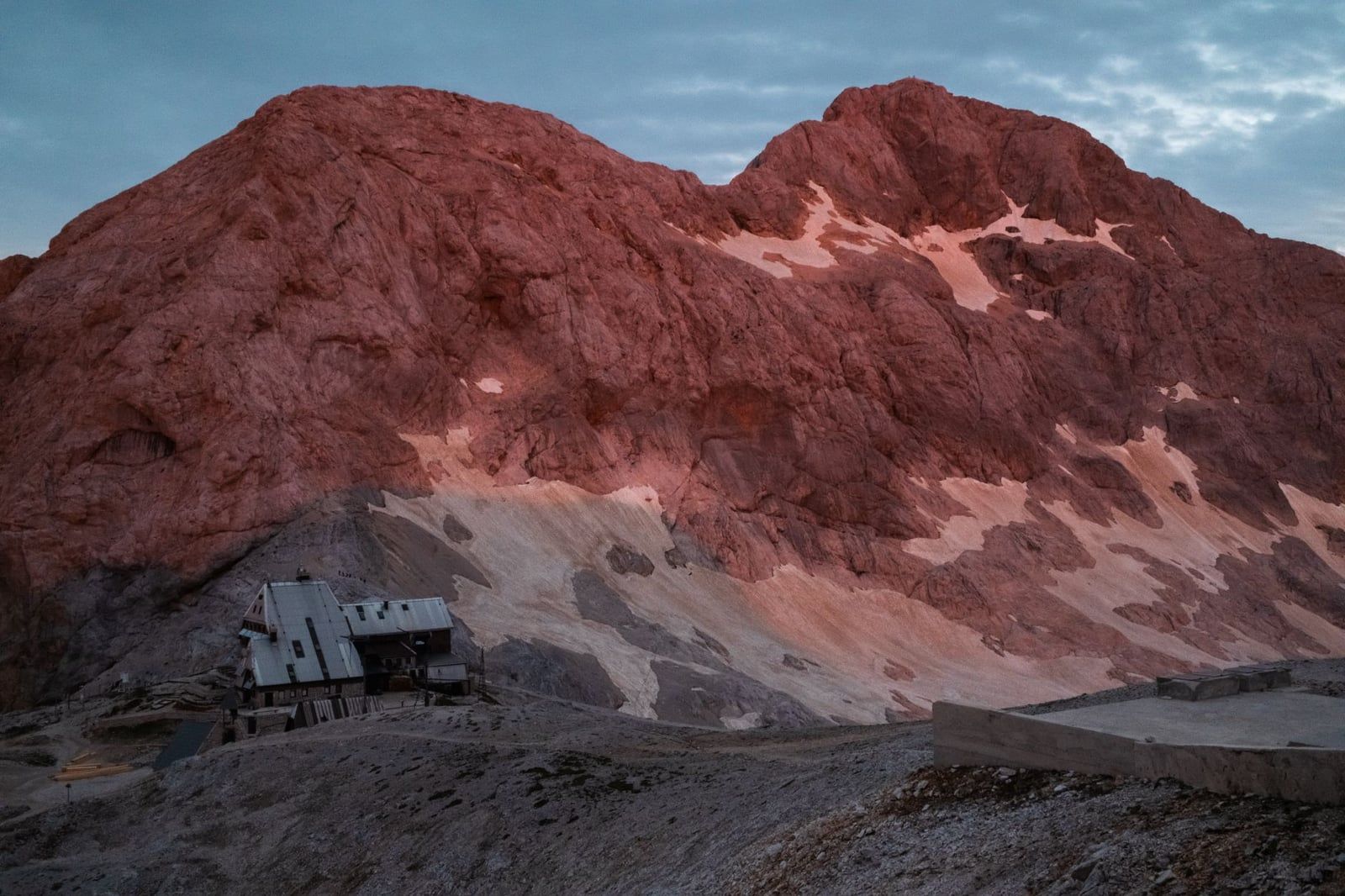
The park has 38 mountain huts, and a night in one is unlike any hotel stay. You get a mattress in a shared dormitory (some huts also have private rooms), a shared bathroom, blankets and a pillow, and food from a communal kitchen — jota (barley-and-bean stew) and štruklji (rolled dumplings) are the staples, and half-board is usually available and good value. Lights go out early because everyone has an early start. It's social, basic and, at 2,000 m, you wake up above the clouds.
| Bed type | Non-member | PZS / Alpine Club member |
|---|---|---|
| Dormitory bed | ~€38 | ~€19 |
| Private room | ~€52 | ~€31 |
That membership discount is real money. A card from the Alpine Association of Slovenia (PZS) or a reciprocal foreign alpine club roughly halves the nightly rate, so if you're doing several hut nights it can pay for itself. Carry cash — card payment isn't guaranteed at remote huts. Two rules shape hut life: sleeping bags are not allowed (huts provide blankets, but bring a sleeping bag liner, which is required), and hut slippers are the norm indoors.
Book ahead, and book early for July–August, weekends and any night connected to a Triglav summit push. Most huts now take online reservations through the Alpine Association system or their own sites, and summit-adjacent huts fill weeks out in high season. For the classic two-day ascent from the Krma valley, the overnight is at Kredarica (2,515 m), the highest hut in Slovenia; from the southern side, Dom Planika pod Triglavom at 2,400 m does the same job just below the summit ridge. Route planning for the climb is covered in our guide to climbing Mount Triglav.
One hut breaks the seasonal mould: Erjavčeva Koča on Vršič Pass (1,525 m) stays open year-round, with private rooms as well as dorm beds, which makes it a rare mid-winter option above the valleys. Below the staffed network sit the bivouacs — unmanned, always-open emergency shelters. They're free, first-come-first-served and unheated, and they exist for mountain emergencies, not holiday lodging. Don't plan a trip around one.
Camping and Glamping (Official Sites Only)
That rule clears up the most common rookie mistake, and it's enforced. The good news: the official campsites are well placed. Around Lake Bohinj, Camp Bohinj at Ukanc puts you at the quiet western end of the lake, walking distance from the Savica Waterfall trailhead. In the Soča Valley, sites cluster along the river between Bovec and Kobarid, many with the turquoise water a few steps from your tent.
Glamping is the comfortable middle ground — wood cabins, safari tents and eco-resorts with proper beds, often family-run, scattered around Bohinj, Pokljuka and the Soča. Prices sit between a campsite pitch and a hotel room, and kids tend to love them. Camping makes sense if you want the cheapest bed, the flexibility to move between gateways, or an evening by the river; a hut makes sense above the valleys, and a hotel makes sense when you want a bath after a long day. You could easily combine all three across a week.
Lake Bohinj: Stara Fužina, Ribčev Laz and Ukanc
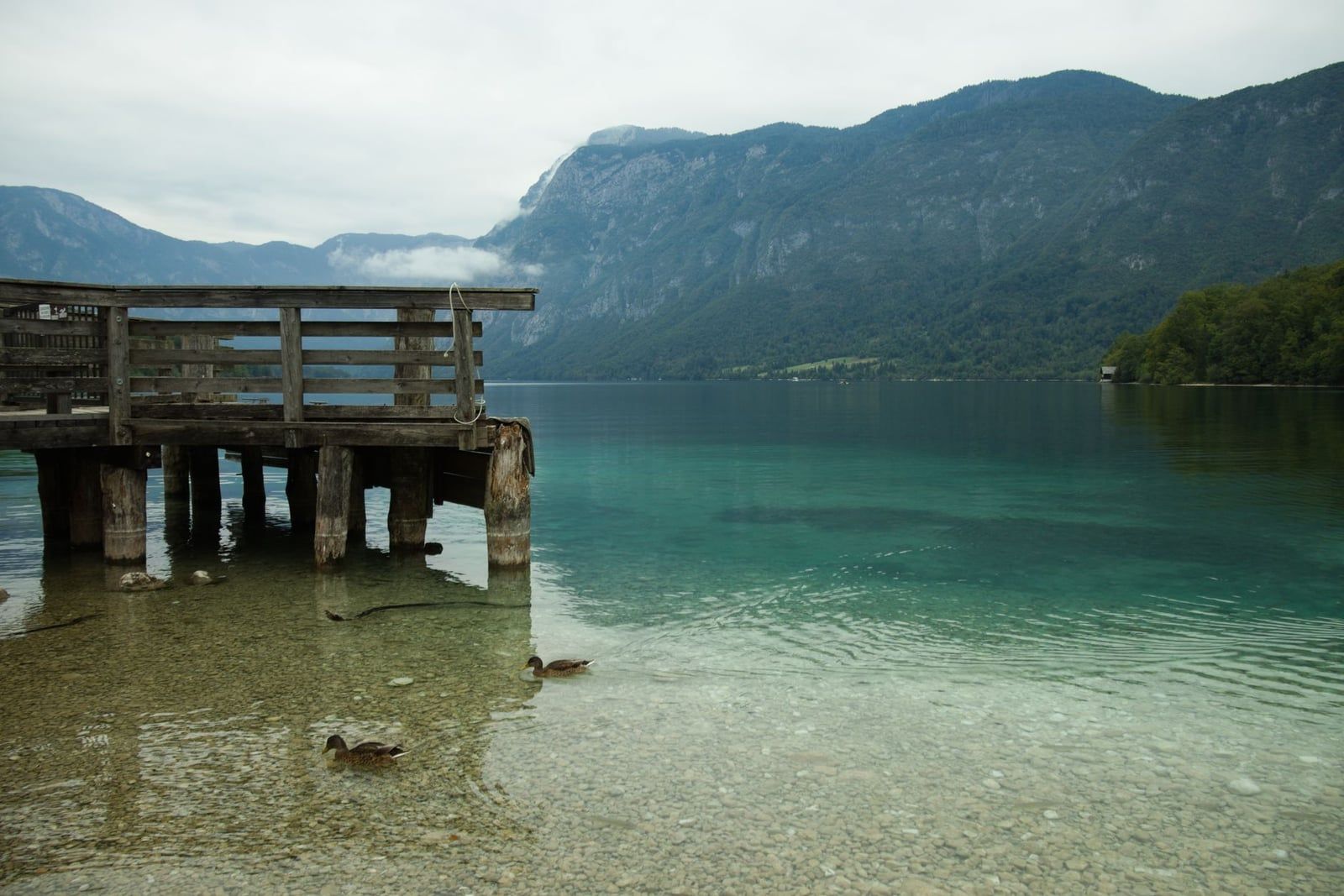
Lake Bohinj is the best all-round base for a park-focused trip, and the three villages at its eastern half each have a distinct character. Pick by what you want from your mornings.
Ribčev Laz: the hub
Ribčev Laz is where the buses stop and the lakefront fills up — the direct bus from Bled, with onward connections to Ljubljana, terminates here. Hotel Bohinj is the upscale pick, with a spa and air-conditioned rooms. At the other end of the budget, Hostel pod Voglom is the only hostel on the lake, with Apartments Cerkovnik a good budget self-catering fallback. Stay here if you're arriving without a car and want everything walkable.
Stara Fužina: the village
One lake bend north, Stara Fužina keeps a working-village feel — wooden hayracks, a slow main street, and trailheads for the Mostnica Gorge and the Vogar viewpoint at the edge of town. Hotel Majerca, a family-run three-star with a solid on-site restaurant, anchors the mid-range; self-catering apartments dominate the rest. This is the pick for families who want a kitchen and a quiet base but still be ten minutes' walk from the water.
Ukanc: the quiet end
Ukanc sits at the lake's western tip, closest to the Savica Waterfall and the cable car to Vogel, and it's the quietest of the three. Vila Park, an adults-only B&B, is the notable stay; beyond it, chalet-style apartments suit groups. The trade-off is distance from the bus hub, which matters less than you'd think — see below.
What makes Bohinj work car-free is the free summer transit network: buses linking the villages, trailheads and the Savica cable car area from late June to late September, including a hop-on hop-off line up to the Pokljuka plateau. In July and August you genuinely don't need a car here. Trails, swimming spots and the lake itself are on your doorstep — our Triglav National Park hiking guide starts from these trailheads.
Kranjska Gora, Bled and the Northern Valleys
The northern side of the park runs on Kranjska Gora. From this one resort town you reach the Vrata, Krma and Martuljek valleys, the Vršič Pass road, and — in winter — the country's best-known ski slopes. Smaller villages nearby trade convenience for quiet, and Bled covers the comfort-first end of the market.
Kranjska Gora: the northern gateway
Kranjska Gora is a proper walkable resort town — restaurants, gear shops, a ski area in winter. Budget travellers land at Pri Marusi, a guesthouse that punches above its price; the mid-range runs through Hotel Vandot and Garni Hotel Miklič; Boutique Hotel Skipass covers the top end. Book early for February, when the ski crowd takes the town.
Lake Jasna and Gozd Martuljek: quieter neighbours
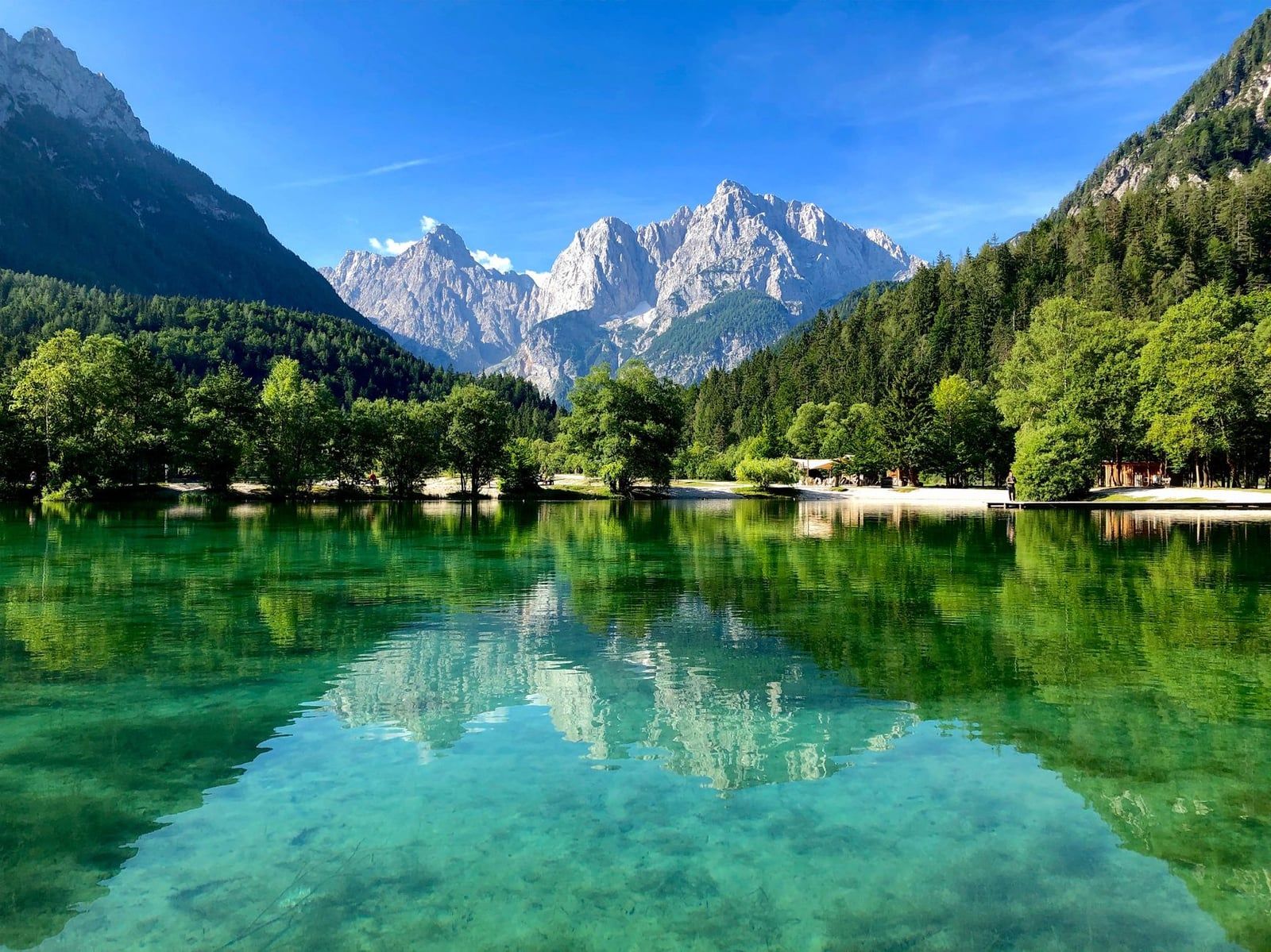
If Kranjska Gora feels too busy, drop 1.2 km south to Lake Jasna, a small twin pond ringed by peaks. Rooms Barovc handles the budget end, Jasna Chalet Resort is a family-friendly aparthotel, and Milka — a six-room boutique hotel — is one of the most stylish stays in the country. Gozd Martuljek, a couple of kilometres further, spreads guesthouses and chalets along a stream below the Martuljek mountains. Both give you the same trailheads with more quiet.
Mojstrana: for Vrata and Peričnik
Mojstrana, in the Sava valley below the Vrata valley road, is the base for the Triglavska Bistrica trail, the view of Triglav's near-3-km-wide north face, and the walk to Peričnik Waterfall. A summer shuttle runs to the waterfall from town. It's a small, practical place — apartments and guesthouses rather than hotels — for people who came for the mountains, not the restaurants.
Bled: comfort ten minutes out
Bled, Slovenia's most popular base town, sits about a 10-minute drive from the park and works well if you want hotel comfort, a lake of its own, and day trips into the park. The trade-off is drive-and-park logistics: trailhead car parks fill by mid-morning in July and August. Buses run roughly hourly to Bohinj in summer, so it functions as a base without a car too. Our Lake Bled tours page covers the day-trip options from town into the park.
Connecting all of this is the Vršič Pass road — 50 hairpins climbing to 1,611 m between Kranjska Gora and the Trenta valley. It opens only in summer, roughly late May to October, and a seasonal bus line runs Kranjska Gora–Vršič–Bovec while it's open. If your itinerary links the north with the Soča, that road's calendar is your calendar.
Bovec, Kobarid and the Soča Valley
The park's western side belongs to the Soča River, and almost every bed here orbits it: rafting and canyoning outfits in Bovec, farm plateaus above Kobarid, and campsites strung along the banks in between. Distances are longer on this side — the northern trailheads are a couple of hours away by road — so base here when the river is the point of the trip.
Bovec: the adventure base
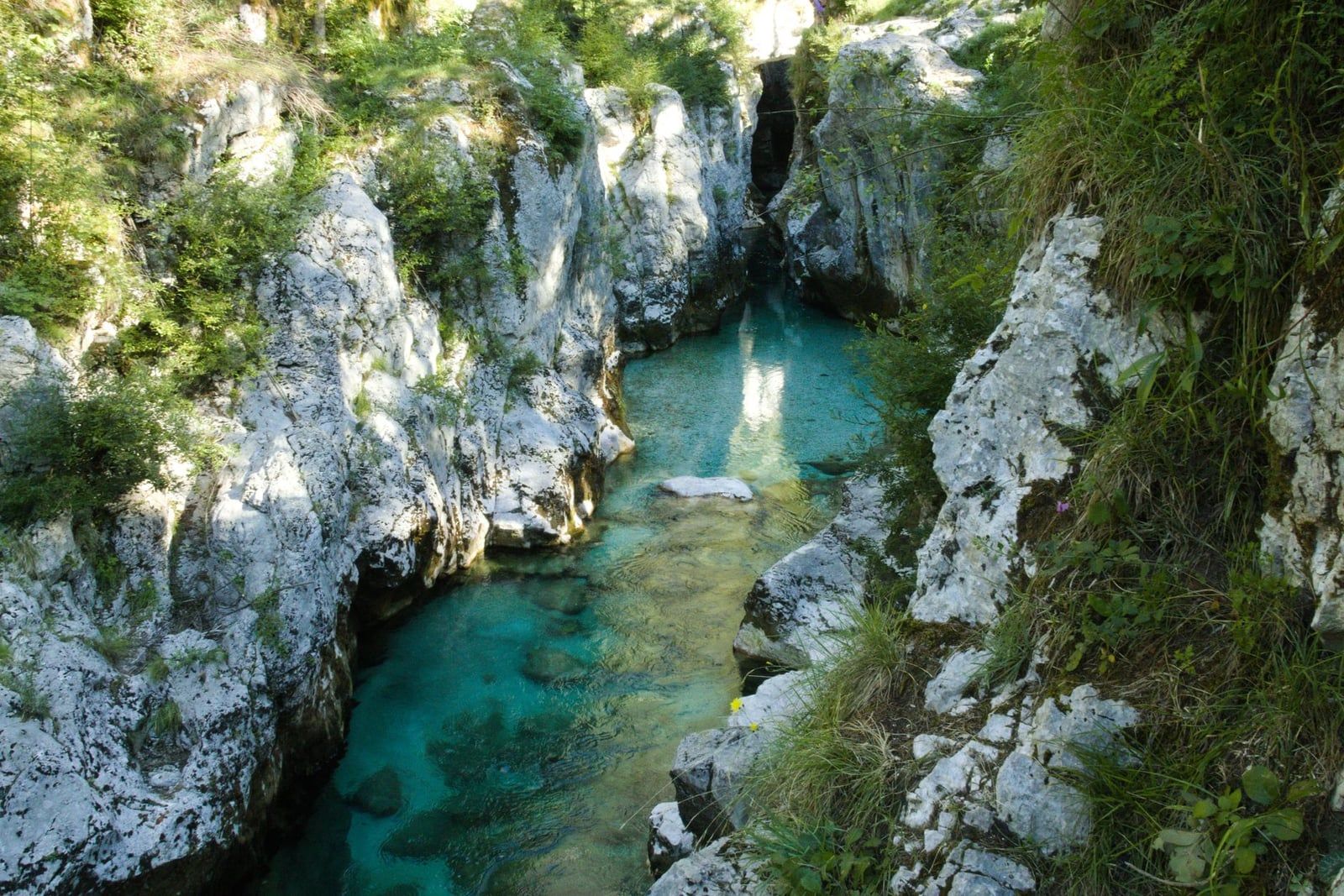
Bovec is the best base for river sports — whitewater rafting, kayaking and canyoning on the emerald Soča, with the Great Soča Gorge and the river's source in Trenta up the valley. Hostel Soča Rocks is the budget pick with sociable dorms; Hotel Sanje ob Soči is a three-star aparthotel with a three-night minimum stay; Hotel Soča adds a four-star badge and an outdoor pool; and Hotel Dobra Vila, converted from a historic telephone exchange, is the luxury option. Canyoning trips from town are covered on our canyoning tours page.
Kobarid: the slow valley
Half an hour downstream, Kobarid runs at a slower pace — farm plateaus, WWI heritage, and some of the region's best food. Apartments Pri nas covers midrange self-catering; Nebesa Chalets offers four adults-only chalets with spa access and breakfast included; and Tourist Farm Kranjc in Koseč above town pairs beds with home-cooked dinners and views over the valley. Come here for a soaking-up-the-valley stay rather than a march through trailheads.
Base here rather than Bohinj or Kranjska Gora if the Soča is your main reason for the trip — rafting mornings, gorge afternoons, and Tolmin's gorges an hour south. In summer you can cross Vršič Pass by bus; the rest of the year the route runs around via the Bohinj side. If you're weighing up routes from Ljubljana or the airports, our guide to getting to Triglav National Park breaks down the options.
Which Base Should You Choose?
Match the base to the trip, not the postcard. Hut-to-hut trekkers and Triglav summit aspirants should start from Bohinj or Pokljuka on the south side, or Kranjska Gora for the Krma and Vrata approaches, and sleep in huts after the first night. Families and lake-lovers: Lake Bohinj, specifically Stara Fužina. Adventure travellers: Bovec, with Kobarid if you'd trade rafting shuttles for quiet. Comfort-first visitors and day-trippers: Bled — or Ljubljana, if this is one stop on a wider Slovenia trip.
| Lake Bohinj (Ribčev Laz, Stara Fužina, Ukanc) | Hiking, swimming and hut access from the doorstep | Excellent in summer — free transit, direct buses from Bled |
| Kranjska Gora / Lake Jasna | Vrata and Krma valleys, Vršič Pass, winter skiing | Good — buses to trailheads and over the pass in summer |
| Bled | Comfort, dining and flexible day trips | Good — roughly hourly summer buses to Bohinj |
| Bovec / Kobarid | Rafting, canyoning and Soča Valley gorges | Workable — seasonal bus over Vršič, otherwise drive |
The car-free reality check: it works in high season and gets thin fast outside it. From late June to early September, the free Bohinj transit (including the Pokljuka hop-on line), the Kranjska Gora–Vršič–Bovec bus and the Mojstrana–Peričnik shuttle reach the big trailheads without a car. From October to June those services stop, most huts close, and you'll want wheels — or a single-base trip in one valley. Winter visitors should base in a valley town: Kranjska Gora for the ski slopes, Bohinj or Bled for everything else, with our winter guide to Triglav National Park covering what stays open.
Booking Tips: Seasons, Prices and Park Rules
Work backwards from the calendar. For July and August, reserve hut beds and gateway accommodation three to six months out — summit-adjacent huts like Kredarica and the lakeside hotels in Bohinj go first. In the shoulder months, June and September, you can book a fortnight ahead and still get choices, at lower rates, with most huts still open in early September. November is the dead month: short days, closed infrastructure, and thin pickings outside the valley towns.
Seasonal openings to plan around: mountain huts run late June to early September (Erjavčeva Koča on Vršič is the year-round exception); the Vršič Pass road opens roughly late May and closes in autumn — check promet.si for live status in spring and autumn, since the road also takes weekday maintenance closures; the free Bohinj transit runs late June to late September. For Triglav summit attempts, aim for July through September.
The park's rules also shape where you can sleep. Camping and overnight stays are confined to designated areas; sleeping in vehicles at trailheads is prohibited; open fires are banned outside designated spots. Beyond sleeping, the code of conduct bans swimming in high-mountain lakes, cycling off designated routes, and drone flights without prior authorisation from the park — drone fines have been reported between €200 and €2,500, and supervisors do check social media footage.
Practicalities that save money and hassle: carry cash euros for huts and rural parking; take half-board at huts when offered, since dinner up the mountain is worth more than the price; and filter your gateway stays by the Triglav National Park Quality Mark when the choice is close. If you're pairing your bed with booked activities, our Triglav National Park tours page lists guided trips from each base town.
Frequently asked questions
Can you stay overnight inside Triglav National Park?
Yes. Options include 38 mountain huts, six cottages run by the park itself (Hut Goreljek na Pokljuki, Vršič Hut, Vrata Hut, Trenta Lodge, Trenta apartments and Planinka House), official campsites, and guesthouses in hamlets like Stara Fužina, Ribčev Laz and Ukanc at Lake Bohinj. Most hotels sit just outside the boundary.
Is wild camping allowed in Triglav National Park?
No. Camping is only allowed at designated campsites, and wild camping can draw a fine of up to €1,000. Sleeping in vehicles at trailhead car parks is also prohibited.
Do I need to book mountain huts in advance?
Yes, reservations are strongly encouraged, and essential for July–August, weekends and Triglav summit overnights. Many huts take online bookings through the Alpine Association system.
How much does a night in a mountain hut cost?
Roughly €38 for a dormitory bed in a Category I hut without membership, or about €19 with a PZS/Alpine Club card; private rooms run about €52 and €31 respectively. Blankets are provided, sleeping bags are not allowed, and a sleeping bag liner is required.
What is the best base for visiting Triglav National Park — Bled, Bohinj, Kranjska Gora or Bovec?
It depends on the trip: Lake Bohinj for hiking inside the park, Kranjska Gora for the northern valleys and Vršič Pass, Bovec and Kobarid for Soča river adventures, and Bled for comfort, restaurants and flexible day trips.
Can you explore Triglav National Park without a car?
Yes, in high season. From late June to early September, Lake Bohinj's free summer transit network, the Kranjska Gora–Vršič Pass–Bovec bus and the Mojstrana–Peričnik shuttle reach key trailheads. Outside that window, you'll need a car or a single-base itinerary.
Is Vršič Pass open all year?
No. The 50-hairpin road over the 1,611 m pass is open in summer only, roughly late May to October, with occasional weekday maintenance closures. Check promet.si for live status in spring and autumn.
What is the Triglav National Park Quality Mark?
An official label for accommodation and service providers that support the local economy and traditions, guarantee quality and operate with respect for nature. The park lists certified providers on tnp.si, and it's a useful filter when comparing stays.
Sources
- Triglav National Park Public Institute — Accommodation (tnp.si/en/visiting-park/
- Triglav National Park Public Institute — Mountain Huts (tnp.si/en/visiting-park/
- Triglav National Park Public Institute — Code of Conduct (tnp.si/en/visiting-par
- Triglav National Park Public Institute — Basic Information (tnp.si/en/park/basic
- Promet.si — Slovenian roads and Vršič Pass status (promet.si)